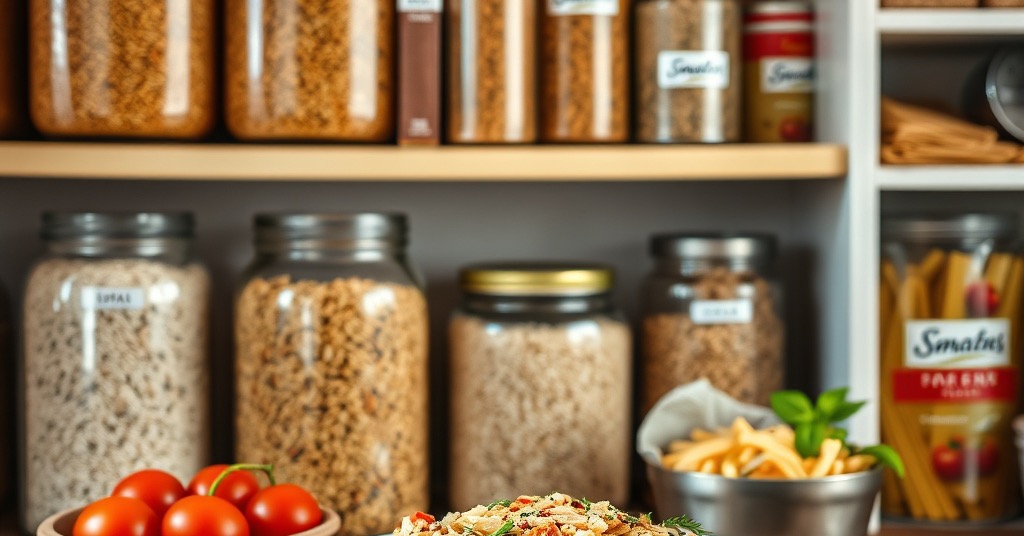
A well-stocked pantry is the invisible foundation of a relaxed kitchen. Keep the right staples in the house and you can cook any time without an extra trip to the store, save money, and throw away far less. Even so, stocking a pantry often feels complicated — when really all you need is a good list, a few storage rules, and a simple system. That's exactly what you'll get here: the essential staples list for pantry, fridge, and freezer, the right way to store food by group, the FIFO principle, and a checklist to take with you.
Why a Well-Thought-Out Pantry Pays Off
The payoff is threefold: money, time, and less waste. Keep staples on hand and you can buy bigger — and therefore cheaper — packs, and rarely have to make a spur-of-the-moment, pricey top-up shop. At the same time you save time, because you don't have to head out for every dish — the base is already there. And you throw away less, because a clear overview stops things from being forgotten in the back corner of the cupboard and going off. On top of that comes convenience: on a day when there's nothing fresh in the house, a good pantry still lets you conjure up a proper meal — pasta with tomato sauce, a lentil curry, a quick soup. That makes a stocked pantry the foundation of any weekly plan; to turn it into concrete meals, see our weekly meal plan with shopping list.
The Essential Staples List
A good stock spreads across three areas — you don't have to buy it all at once, so build the list up gradually. Pantry (dry and shelf-stable): rice, pasta, oats, lentils and dried or canned beans, canned tomatoes, flour, oil, vinegar, salt, sugar, and a base set of spices (pepper, paprika, curry, herbs), plus canned goods like chickpeas, corn, and passata as a quick base. Fridge: eggs, some cheese, yogurt or quark, butter, a few long-keeping vegetables like carrots and onions, plus mustard and other basic condiments — these keep comparatively long and show up in lots of dishes. Freezer: frozen vegetables (cheap, nutritious, and no waste), berries, some bread in reserve, and your own pre-cooked portions like soup, chili, or bolognese — the freezer is your insurance against "nothing in the house." With this foundation you can cook almost any time; you buy fresh ingredients deliberately on top, instead of starting from zero every time.
Plan your week and the shopping list writes itself
Start the free meal planner →Store It Right: Shelf Life by Food Group
How long something keeps depends heavily on storing it correctly. Dry goods like rice, pasta, and legumes keep for many months to years when stored cool, dry, and airtight. Flour and oats also last a long time, but should be protected from moisture and pests — ideally in sealable containers. Oils belong somewhere dark and not too warm. In the fridge, eggs keep for several weeks, hard cheese longer than soft cheese, and yogurt and quark until the printed date and often a little beyond if they're intact. Cooked leftovers generally keep for 3 to 4 days. Delicate vegetables (leafy salads, herbs) get used up fastest, while sturdy ones (carrots, cabbage) keep for weeks. In the freezer, much stays in good quality for 2 to 3 months — label containers with contents and date so nothing turns into a mystery. This storage logic is the same one that applies when prepping meals; more on that in the beginner's guide to meal prep.
First In, First Out — Order That Sticks
The most effective principle against food waste is also the simplest: First In, First Out (FIFO). It means moving older stock to the front and putting newly bought items at the back. That way you automatically reach first for whatever would expire soonest, and nothing rots unnoticed in the back corner. In practice: when you put the shopping away, place the new packs behind the old ones, keep older items at eye level in the fridge, and check the freezer regularly. Combined with a rough overview of what you actually have in the house, this stops duplicate purchases and spoiled leftovers. Once established, a FIFO system runs almost on its own and saves you noticeable money over the year.
From Pantry to Weekly Plan: Cook Without Shopping in 3 Steps
A pantry only shows its value once you use it. Here's how to turn what you have into finished meals in three steps:
- Step 1 — Take stock: See what base you've got — a carbohydrate (rice, pasta), a protein (lentils, beans, eggs), and a flavor base (canned tomatoes, spices, sauce). Almost always, that alone points to a dish.
- Step 2 — Fill the gaps deliberately: Note down only what's genuinely missing — some fresh veg, maybe a herb. That keeps the shop small and cheap.
- Step 3 — Combine and cook: Pantry plus a little fresh produce turns into dishes like lentil curry, tomato pasta, or vegetable soup.
This is exactly where Culinse's recipe discovery helps: filter by the ingredients you have in your pantry and get matching recipes suggested — missing ingredients land automatically in a combined shopping list. And if you're watching the budget, you'll find more ideas in our collection of meals under €5.
Your Pantry Checklist
So you can get started right away, this checklist sums up the basics — pin it to the pantry door or take it with you to the store:
- Pantry: rice, pasta, oats, lentils, beans (canned/dried), canned tomatoes, flour, oil, vinegar, salt, spices, chickpeas, corn
- Fridge: eggs, cheese, yogurt/quark, butter, carrots, onions, mustard
- Freezer: frozen veg, berries, bread in reserve, pre-cooked portions (soup, chili, bolognese)
Copy the list into your notes app and add whatever you use often. For a digital, automatically totaled shopping list based on your recipes, build one with Culinse on top.
The Takeaway
Stocking a pantry is no black art — it's a simple system in three parts: a good base list for pantry, fridge, and freezer, the right storage by food group, and the FIFO principle that prevents waste. With that, you can cook almost any time, save money, and throw away less. Build up your stock gradually with the list above, and make taking stock as you put the shopping away a routine — the rest runs on its own.
Frequently Asked Questions
The key questions about stocking a pantry:
- What belongs on a good pantry list? In the pantry: rice, pasta, oats, legumes, canned tomatoes, flour, oil, and spices; in the fridge: eggs, cheese, yogurt, butter, and long-keeping vegetables; in the freezer: frozen veg, berries, bread, and pre-cooked portions.
- How do I store staples correctly? Dry goods cool, dry, and airtight; oils dark; fridge items sorted by shelf life; freezer items labeled with contents and date. That keeps everything fresh longer and nothing gets forgotten.
- What does the FIFO principle mean? First In, First Out means: older items to the front, new ones to the back. You use up what expires first, and stop food from spoiling unnoticed.
- How do I avoid food waste? With an overview of your stock, the FIFO principle, proper storage, and freezing leftovers and surpluses. Flexible base recipes like soup or stir-fries help use up leftovers.
- How do I cook from the pantry alone, without shopping? Take stock of your base — a carbohydrate, a protein, and a flavor base — and almost always a dish emerges, like lentil curry, tomato pasta, or soup. You only buy what's genuinely missing, deliberately.