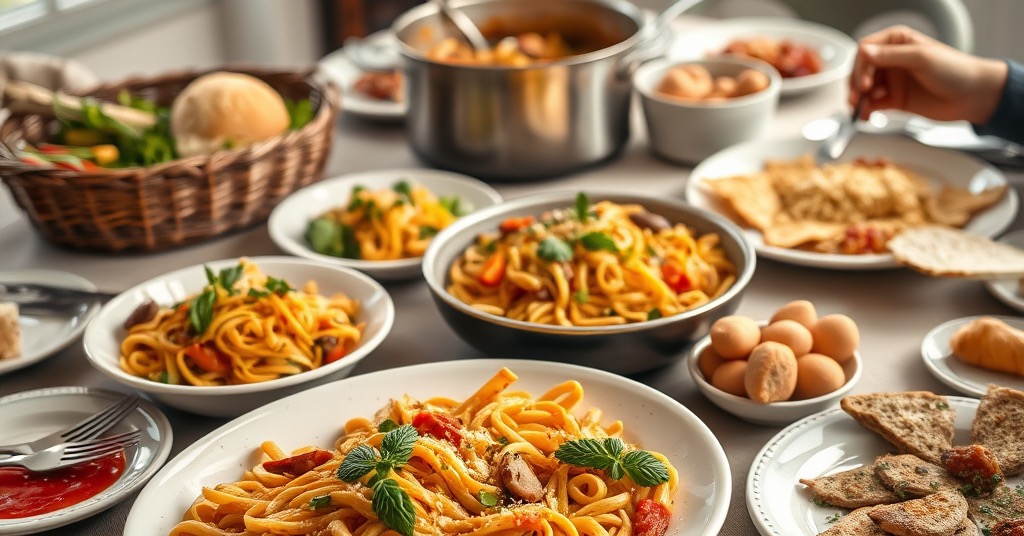
Feeding one person is a logistics problem. Feeding a family is that plus negotiation: different tastes, different appetites, and a small person who decided this morning that they no longer eat the thing they loved last week. A good family meal plan doesn't try to delight everyone every night — it builds a system so dinner mostly runs itself.
The goal isn't more cooking or more variety. It's fewer decisions and fewer surprises. Here's how to plan for a household without turning your kitchen into a short-order diner.
Build a Rotation of Meals Everyone Actually Eats
Most families happily eat the same 8 to 10 dinners on repeat — and that's a feature, not a failure. Write down the meals that reliably land with everyone. That list is the backbone of every week; novelty is the exception you add on top, not the foundation.
- List your proven winners first — the dinners that disappear without complaint.
- Aim for roughly 8–10 core meals. That's enough that no week feels repetitive, few enough that planning is quick.
- Add just one new recipe a week if you want to grow the list, rather than reinventing every night.
Plan your week and the shopping list writes itself
Start the free meal planner →Give the Week an Anchor
Assigning a loose theme to each night kills the nightly 'what's for dinner' negotiation before it starts. The family knows roughly what's coming, and you only decide the details.
- Pasta Monday, Taco Tuesday, sheet-pan Friday — the labels do the deciding for you.
- Anchor nights are flexible: 'Taco Tuesday' can be beef, chicken, beans, or fish.
- Kids find the rhythm reassuring, and it quietly teaches them what to expect.
Plan Deconstructed Dinners for Picky Eaters
The fastest way to feed mixed tastes from one pot is to serve the parts separately and let everyone build their own plate. No one's cooking two dinners; people just assemble differently.
- Lean on customizable formats: rice bowls, a pasta bar, baked-potato night, tacos, sheet-pan dinners.
- Keep a 'safe' component everyone eats on the table next to anything new — no pressure to finish it.
- Let kids help shop and cook. A say in the meal makes it far more likely to actually get eaten.
Scale Recipes to Your Family's Size
Most recipes are written for two to four servings, and a family of five hits the wall fast. Scale quantities up before you shop so you're not short a portion at the table — and double a dinner now and then on purpose, so tonight's cooking becomes tomorrow's lunch.
Reuse the Weeks That Work
When a week lands — everyone ate, little got wasted, you weren't stressed — don't throw the plan away. Keep it and run it again in a few weeks. Three or four good weeks on rotation quietly covers a whole month, and each one gets easier because you already know it works.
One List for the Whole Household
Turn the family's week into a single combined shopping list with scaled quantities, check the pantry first, and shop once. A bigger household magnifies every benefit of planning — and every cost of not planning, from waste to midweek takeout for five.
How Culinse Helps Families
Culinse is a free meal planner built for exactly this kind of repeatable, household-sized planning:
- Save your family's go-to dinners into a collection so your rotation is always one tap away.
- Plan the week in a simple grid, then scale any recipe to your family's size automatically.
- Copy a week that worked and reuse it — your rotation of good weeks lives on, no replanning from scratch.
- Get one combined shopping list for the whole household, quantities added up and sorted by store section.
- Mark what you already have so pantry staples don't end up bought twice.
A family meal plan isn't about cooking more — it's about deciding less. Build a rotation everyone eats, give the week an anchor, and let dinner get boring in the best possible way. Plan your week free at culinse.com.