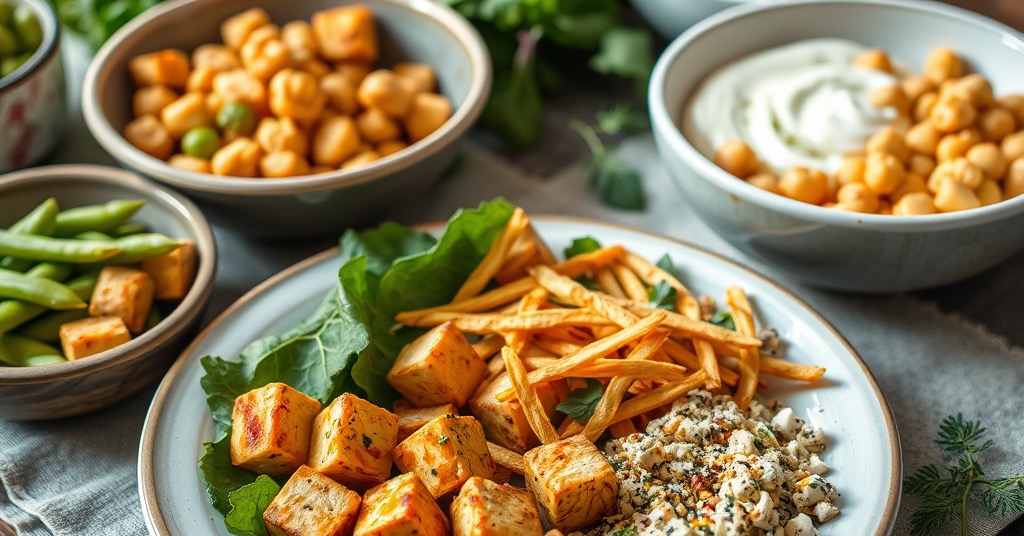
The biggest myth about vegetarian eating is that it can't deliver enough protein. The truth is that it can — easily — once you know which foods do the heavy lifting and how to build a plate around them. This guide covers the best meatless protein sources, 20 recipes that each hit 25 g of protein or more, a sample high-protein day, and a simple strategy for getting past 100 g of protein without a single piece of meat.
Can you get enough protein without meat?
Yes, and it isn't close. Plenty of plant and dairy foods are protein-dense: lentils, beans, chickpeas, tofu, tempeh, edamame, Greek yogurt, cottage cheese, eggs, and seitan all pack a serious amount per serving. The reason some vegetarians fall short isn't the diet itself — it's defaulting to carb-heavy meals (pasta, toast, rice bowls with little else) and treating protein as an afterthought. There's a small nuance worth knowing: most individual plant proteins are slightly lower in one or two essential amino acids than animal proteins. In practice this matters very little if you eat a varied diet across the day, because different plant foods complement each other — beans and grains together, for instance, cover the full amino-acid range. You don't need to engineer this at every meal; eating a range of sources over the day handles it on its own. Dairy and eggs, available to most vegetarians, are complete proteins and make hitting targets even simpler.
Best vegetarian protein sources, ranked
Here's a rough guide to how much protein the staples deliver per common serving, so you can build meals with intent rather than hope:
- Seitan (100 g): ~25 g — the highest of the plant options
- Tempeh (100 g): ~19 g
- Tofu, firm (200 g): ~24 g
- Lentils, cooked (200 g): ~18 g
- Edamame (150 g): ~17 g
- Greek yogurt (200 g): ~20 g
- Cottage cheese (200 g): ~22 g
- Chickpeas, cooked (200 g): ~15 g
- Black beans, cooked (200 g): ~15 g
- Eggs (each): ~6–7 g
- Quinoa, cooked (185 g): ~8 g
- Edam/cheddar cheese (30 g): ~7 g
Plan your week and the shopping list writes itself
Start the free meal planner →The takeaway: lead each meal with one concentrated source (tofu, tempeh, seitan, dairy, or a generous portion of legumes), then let grains, vegetables, nuts, and seeds top it up. That single habit is what separates a high-protein vegetarian plate from a carb-heavy one.
20 high-protein vegetarian recipes
Each of these is built to land at roughly 25 g of protein or more per serving. They're grouped by how you'll likely use them. Quick weeknight options first:
- Tofu and broccoli stir-fry — firm tofu, broccoli, soy-ginger sauce over rice.
- Black bean and cheese quesadillas — beans, cheese, peppers; ready in ten minutes.
- Chickpea curry — chickpeas in a tomato-coconut sauce with spinach.
- Egg and feta shakshuka — eggs poached in spiced tomato sauce with feta.
- Lentil bolognese — red lentils standing in for mince over pasta.
- Halloumi and grain bowl — pan-fried halloumi, quinoa, roasted vegetables.
- Tempeh tacos — crumbled, spiced tempeh with slaw and avocado.
Meal-prep friendly
- Lentil and feta salad — lentils, cucumber, tomato, red onion; holds for days.
- Quinoa and black bean bowls — batch-cooked base with corn, peppers, and lime.
- Tofu and peanut noodle jars — cold noodles, tofu, vegetables, peanut sauce.
- Chickpea shawarma bowls — spiced chickpeas, garlic-yogurt sauce, rice.
- Egg muffins with spinach and cheese — bake a dozen, eat through the week.
- Three-bean chili — freezes beautifully in portions.
- Cottage cheese and roasted-veg pasta salad — high protein, served cold.
High-protein vegan
- Tempeh and quinoa Buddha bowl — tempeh, quinoa, kale, tahini dressing.
- Red lentil dahl — lentils, tomato, warming spices, served with rice.
- Tofu scramble breakfast wrap — turmeric tofu, vegetables, hot sauce.
- Edamame and soba noodle salad — edamame, soba, sesame dressing.
- Seitan stir-fry — seitan strips, mixed vegetables, savory sauce.
- Black bean and sweet potato chili — hearty, freezer-friendly, fully plant-based.
How to hit 100g+ protein per day as a vegetarian
Reaching a high daily total is mostly about anchoring each meal and not letting snacks slip into pure carbs. Start breakfast with a concentrated source — 200 g of Greek yogurt with seeds, or a tofu scramble — for around 25–30 g. Build lunch around legumes or tofu, like a quinoa and black bean bowl or a lentil salad, for another 25–30 g. Make dinner your second anchor: a tofu stir-fry, tempeh bowl, or three-bean chili for 30 g or more. Then close any gap with high-protein snacks — cottage cheese, edamame, a handful of roasted chickpeas, or a glass of soy milk — each adding 10–20 g. Anchor, anchor, anchor, top up: three protein-led meals plus one or two deliberate snacks gets most people comfortably over 100 g. The mistake to avoid is the carb-only meal — plain pasta, a bagel, a rice-and-veg bowl with no real protein source — because each one quietly costs you 20–30 g you'll struggle to make up later.
A sample high-protein vegetarian day
This is one easy-to-follow template you can adapt to your tastes and calorie needs:
- Breakfast: Greek yogurt bowl with berries, chia, and a spoon of nut butter (~28 g)
- Lunch: quinoa and black bean bowl with corn, peppers, and lime (~26 g)
- Snack: edamame with sea salt (~17 g)
- Dinner: tofu and broccoli stir-fry over rice (~30 g)
- Optional snack: cottage cheese with cucumber (~22 g)
That lands comfortably above 100 g of protein, entirely meat-free, with plenty of fiber and volume along the way.
Conclusion
High-protein vegetarian eating isn't complicated once you stop treating protein as an afterthought. Lead every meal with a concentrated source — tofu, tempeh, seitan, legumes, or dairy — eat a variety of them across the day, and use simple snacks to close any gaps. Pick a few of the 20 recipes above, anchor your three main meals, and 100 g a day stops being a challenge and becomes a default. Want the recipes to come to you? Culinse lets you filter millions of recipes by both vegetarian and high protein at once, then turns your weekly picks into a single shopping list. For a meatless dinner rotation beyond these, see our vegetarian dinner ideas, and if your goal is fat loss, our guide to meal prep for weight loss pairs naturally with a high-protein approach.
FAQ
Common questions about high-protein vegetarian eating:
- Can vegetarians really get enough protein? Yes, comfortably. Tofu, tempeh, seitan, legumes, Greek yogurt, cottage cheese, and eggs are all protein-dense. The key is leading each meal with one of them rather than building meals around carbs alone.
- Do I need to combine proteins at every meal? No. The idea that you must pair specific foods (like beans and rice) at every single meal is outdated. Eating a variety of plant proteins across the whole day covers the full range of amino acids on its own.
- What's the highest-protein vegetarian food? Among plant options, seitan leads at roughly 25 g per 100 g, followed by tempeh and tofu. Among vegetarian (non-vegan) foods, Greek yogurt, cottage cheese, and eggs are excellent, complete sources.
- How much protein should I aim for? It depends on your weight and activity. People who train often target roughly 1.6–2.0 g per kilogram of body weight per day. A planner that tracks macros makes hitting that target far easier than guessing.
- Are these recipes good for weight loss too? Many are. High-protein, high-fiber vegetarian meals are filling for relatively few calories, which supports a calorie deficit. Watch portions of calorie-dense extras like oils, nuts, and cheese.
This article is general information, not medical or nutritional advice. If you have specific dietary needs or a health condition, consult a doctor or registered dietitian.