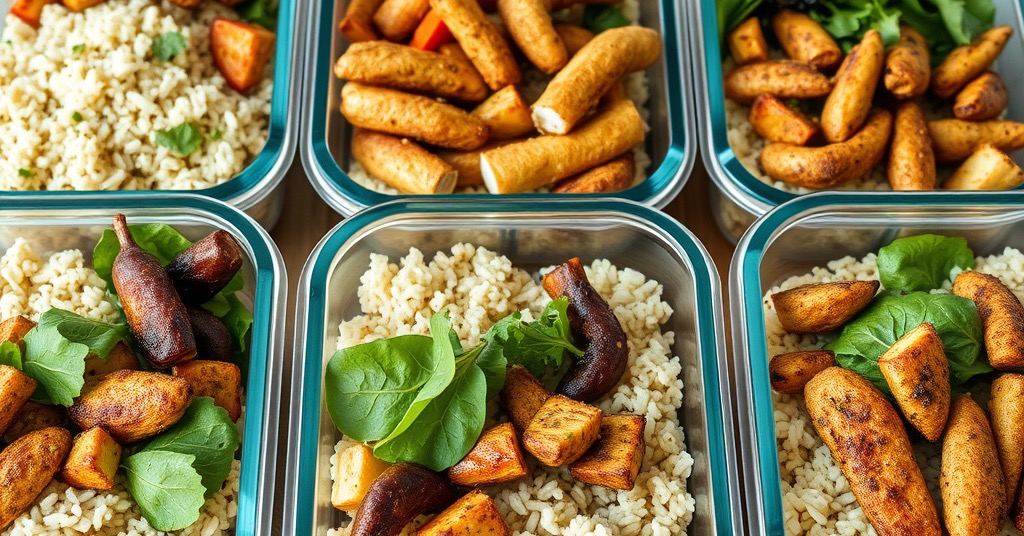
Meal prepping sounds like a lot of work until you actually try it. Then it becomes one of those habits you wonder how you ever lived without. You spend a couple of hours on Sunday and suddenly weekday lunches and dinners just happen — no scrambling, no 'what do I even make tonight', no ordering takeout because you're too tired to think.
This guide walks you through everything: how to plan, what to cook, how to shop efficiently, and how to store it all. No complicated recipes required.
Step 1: Decide What You're Prepping
Most people try to prep too much at first. Start with just one meal category — lunches for the work week, or dinners for Monday through Thursday. That's already a huge win.
- Lunches only: the easiest entry point. Make 4–5 portions of one dish.
- Dinners only: more prep, but saves you the most stressful part of the day.
- Both: realistic once you've done it a few times and know your rhythm.
Plan your week and the shopping list writes itself
Start the free meal planner →Step 2: Pick 2–3 Recipes Max
The biggest mistake beginners make is planning 7 different meals for 7 days. You'll spend 6 hours cooking and hate every minute. Instead, pick 2 or 3 recipes that share ingredients. Eating the same lunch three days in a row sounds boring until you realize you get that time back.
- Look for recipes that use overlapping ingredients (chicken + rice can go in a dozen directions).
- Prioritize things that reheat well: grains, legumes, roasted vegetables, stews, grain bowls.
- Avoid things that go soggy: salads with dressing, crispy textures, anything with fresh herbs mixed in.
Step 3: Make a Proper Shopping List
This is where most meal prep falls apart. You plan three recipes, go to the store, and forget two ingredients. Or you buy duplicates because you didn't check what you already have.
- Write the full ingredient list for every recipe before you shop.
- Combine amounts: if Recipe A needs 2 garlic cloves and Recipe B needs 4, you need 6 total.
- Check your pantry first — you probably already have olive oil, salt, and half the spices.
- Sort your list by store section (produce, dairy, meat, dry goods) so you don't zigzag.
If combining ingredients from multiple recipes manually sounds tedious — it is. That's exactly why tools like Culinse exist. You add your planned recipes for the week and it automatically generates a combined shopping list sorted by category, with correct combined amounts. Free to use at culinse.com.
Step 4: Set Up Your Kitchen First
Before you start cooking, spend 5 minutes getting organized. It makes the whole process faster.
- Clear counter space.
- Get all your containers ready — nothing worse than finishing a batch of rice with nowhere to put it.
- Read through all your recipes once. Find overlapping steps you can do simultaneously.
- Start with things that take longest: roasting vegetables, simmering grains, slow-cooking proteins.
Step 5: Cook Strategically, Not Sequentially
The goal is to use all available time in parallel. While rice is cooking, chop vegetables. While vegetables roast, prep the protein. Experienced meal preppers can do a week of food in 90 minutes because they're never standing around waiting.
- Use your oven, stovetop, and (if you have one) slow cooker or Instant Pot simultaneously.
- Batch-cook base ingredients that work in multiple dishes: a big pot of grains, a sheet pan of roasted veg.
- Season simply at first — you can always add more flavor when you reheat.
Step 6: Store Everything Correctly
Bad storage kills good meal prep. Here's what actually works:
- Glass containers > plastic for most things. They reheat better and don't absorb smells.
- Label with the date if you're meal prepping more than 3 days ahead.
- Fridge lifespan: most cooked food lasts 4–5 days. Anything beyond that, freeze it.
- Keep sauces and dressings separate until you eat — this stops things going soggy.
- Store cut fruit and veg in water-lined containers to keep them fresh longer.
How Long Should Meal Prep Take?
Realistically, if you're cooking for one or two people and prepping 3 recipes, you're looking at 1.5 to 2.5 hours. This includes shopping (if you have a good list) or 60–90 minutes if you already shopped. It gets faster each week as you find your rhythm.
Getting Started: Your First Week
Pick one simple recipe. Make four portions. That's it. Don't over-engineer it the first time.
- A pot of lentil soup. A big grain salad. Roasted chicken thighs with rice.
- Don't buy special containers yet — use what you have.
- Set aside two hours on a Sunday. Put on a podcast.
- See how much time you save during the week. Then expand.
The hardest part of meal prepping is doing it the first time. After that, it becomes routine. The planning gets faster, the shopping gets smarter, and the cooking gets easier. Start simple, stay consistent, and adjust as you go.