JapaneseDessertVegetarianVegan
OhagiGlutinous Rice Balls with Bean Paste, Kinako and Sesame
A Japanese classic that people all over Japan like to roll at home: Ohagi is one of the wagashi, the traditional Japanese sweets, and consists of soft balls of glutinous rice, here in three varieties — completely wrapped in sweet red bean paste, filled with bean paste and rolled in roasted soybean flour (kinako), or rolled in sweet black sesame. Unlike Daifuku — Mochi with Sweet Bean Filling, the rice here is not pounded into a smooth dough but only half mashed, so that the grains can still be felt — ohagi, the sweet for the autumn festival of Higan, when families in Japan visit their ancestors' graves. In spring the same balls are called botamochi, according to tradition after the peony (botan) that blooms then, and in autumn ohagi, after the bush clover (hagi).
60
minutes
4
servings
10
Ingredients

Instructions
Mix the glutinous rice and short-grain rice in a bowl, cover with cold water, swirl it round with your hand and pour off the cloudy water. Repeat until the water stays almost clear, then leave the rice to drain well in a sieve. The short-grain rice makes the balls a little lighter and less chewy than pure glutinous rice.
Put the rice in a pot with a tight-fitting lid together with the water for cooking and leave it to soak: the grains soak up the water, turn chalky white and then cook evenly right to the centre.
Stir in the salt, put the lid on and bring the rice to the boil over a high heat. As soon as it bubbles under the lid and steam escapes, turn the heat down to the lowest setting and cook the rice without lifting the lid.
Take the pot off the heat and leave the rice to rest with the lid closed: in the steam, the grains swell completely and become soft and sticky.
Meanwhile, mix the kinako with the sugar for the kinako in a deep plate. Coarsely crush the black sesame seeds with the sugar for the sesame in a mortar until they smell strongly nutty but individual seeds are still visible, and transfer to a second plate.
Pour the water for the hand water into a bowl, moisten a pestle or the end of a rolling pin in it and pound the hot rice in the pot until about half of the grains are crushed and the mixture holds together. The remaining grains stay whole: in Japan this stage is called hangoroshi, ‘half killed’, and it gives ohagi their typical grainy bite.
Moisten your hands with the hand water and divide the still-warm rice into 12 portions, 4 smaller ones of about 40 g and 8 larger ones of about 55 g. Shape each portion into an oval ball and keep them all under a damp cloth so that the rice does not dry out.
Divide the anko into 4 portions of 60 g each and 8 portions of 15 g each, and roll the small portions into balls with moistened hands.
For the balls coated in bean paste, press a 60 g portion of anko flat on a piece of cling film into a disc of about 9 cm and lay a small rice ball in the centre. Draw the film and the paste up around the rice, twist it closed at the top and shape the ball smooth and oval through the film, then carefully peel the film off.
For the remaining eight balls, press a large portion of rice flat in your moistened hand, set a small ball of anko in the centre and close the rice over it all round until none of the filling is visible.
Roll four of these balls in the kinako sugar and four in the sesame sugar, pressing the coating on lightly so that it sticks well. Arrange the ohagi on a platter by variety, serve at room temperature with green tea and eat them the same day.
Edited by Peter Hölzer, head chef and master butcher
Similar recipes

Culinse · 70 min
Kuri Gohan — Chestnut Rice
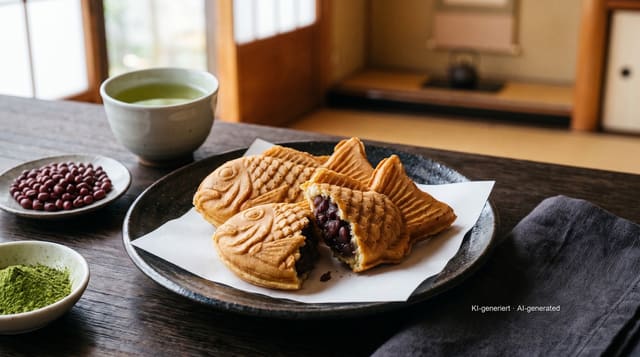
Culinse · 40 min
Taiyaki — Fish-shaped Waffles with Bean Paste

Culinse · 65 min
Gyoza — Pan-fried Dumplings with Pork and Cabbage
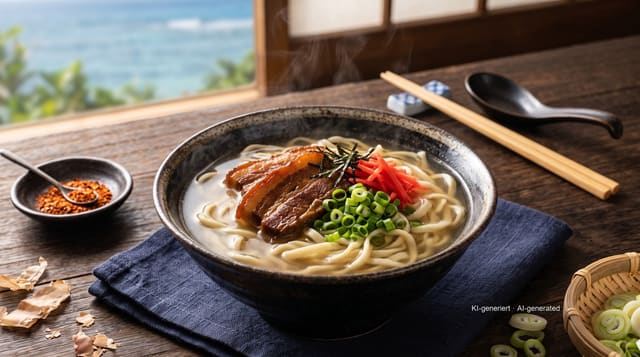
Culinse · 80 min
Okinawa-Soba — Noodle Soup with Pork Belly
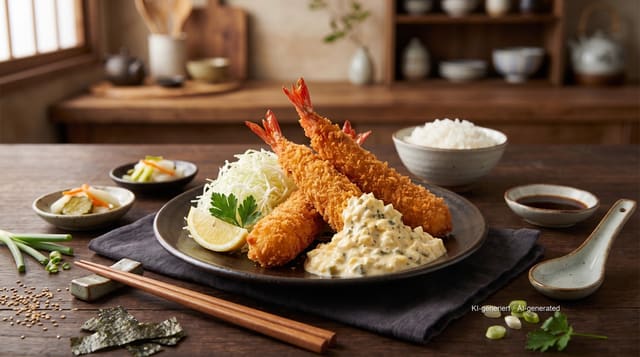
Culinse · 40 min
Ebi Fry — Breaded Prawns with Tartare Sauce

Culinse · 40 min
Tanmen — Tokyo-style Shio-Ramen with Stir-fried Vegetables

Culinse · 35 min
Gyudon — Beef on Rice

Culinse · 35 min