JapaneseSide dishVegetarianVegan
GariPickled Ginger for Sushi
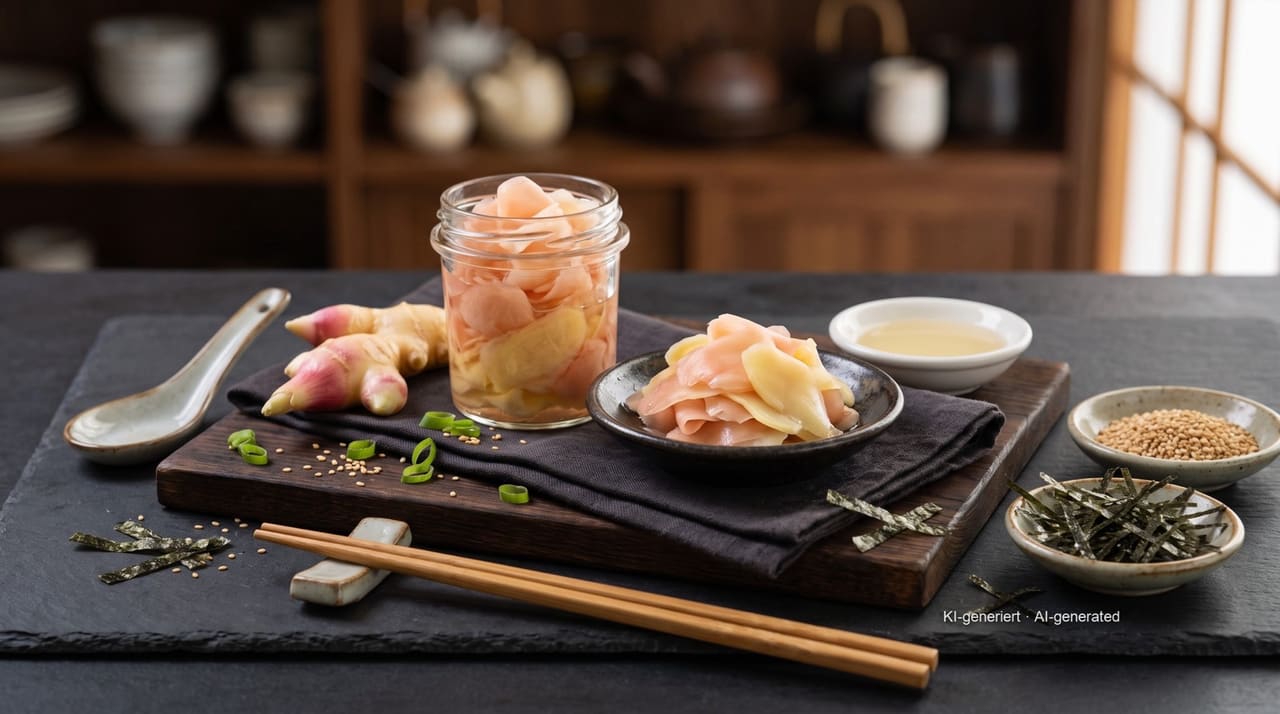
A Japanese classic that sits beside every sushi platter all over Japan: gari is wafer-thin sliced ginger in sweet rice vinegar, crunchy, sweet and sour and only gently hot, and a slice between two pieces of sushi refreshes the mouth for the next bite. It is ready after at least a day in the fridge: young ginger turns a delicate pink by itself, ordinary ginger stays pale yellow, and neither needs any colouring. In the sushi recipes, such as Nigiri — Sushi with Salmon, Tuna and Prawn, gari is bought ready-made; here is the homemade version, which keeps for two months in the fridge.
25
minutes
8
servings
7
Ingredients
Instructions
Rinse a screw-top jar of about 750 ml capacity and its lid with boiling water and leave them upside down on a clean tea towel to drain. This way the jar is clean and warm and will not crack later when the hot brine goes in.
Peel the ginger with the edge of a teaspoon: the thin skin can be scraped off this way without wasting any flesh. With young ginger, leave the pink tips at the shoots on, because they will later colour the brine; cut away any woody or dark patches generously.
Slice the ginger on a mandoline along the grain into wafer-thin slices, so thin that they are almost translucent. Cut along the grain, the slices stay crunchy and do not fall apart; ordinary ginger is more fibrous and hotter and must be sliced especially thinly. Protect your fingers with the mandoline's hand guard and cut the last pieces with a knife instead.
Mix the ginger slices with the salt for the ginger in a bowl and leave to stand. The salt draws out water and some of the heat; the slices become pliable and glisten moistly.
Meanwhile, stir together the rice vinegar, sugar, water for the brine and the pinch of salt in a small pan, bring to the boil and boil until the sugar has dissolved completely. Do not breathe in the steam directly, because it stings the nose.
Take the brine off the heat. Bring the water for blanching to a rolling boil in a second pan, add the salted ginger and stir once: the brief blanching takes away its biting heat and makes the slices tender.
Drain the ginger in a sieve and press it firmly with the back of a tablespoon while it is hot. The less water is left in the slices, the more brine they soak up and the longer they keep.
Fill the hot ginger loosely into the prepared jar and pour the still-hot brine over it until all the slices are covered. Press down with a clean spoon so that no air bubbles remain, leave the jar to cool uncovered and only then seal it.
Leave the ginger to steep in the fridge for at least 24 hours before eating: this way it becomes mildly sweet and sour and loses the last of its biting heat. Young ginger turns a delicate pink by itself, because the pigments in its pink tips react with the acid; ordinary ginger stays pale yellow and tastes a little stronger, but just as good.
To serve, take out the slices with clean chopsticks or a fork, let them drain slightly and lay them in a small heap beside the sushi. A slice between two pieces of sushi clears the taste of the previous piece from the mouth, so that the next tastes completely fresh again.
Edited by Peter Hölzer, head chef and master butcher
Similar recipes

Culinse · 10 min
Kyuri no Asazuke — Quick-pickled Cucumbers
Culinse · 45 min
Amazake — Sweet Rice Drink Made with Koji

Culinse · 45 min
Kanto-style Sukiyaki — Beef in a Tabletop Hot Pot

Culinse · 45 min
Tenri-Ramen with Chinese Cabbage and Garlic

Culinse · 35 min
Miyazaki-Ramen with Soft Noodles and Takuan

Culinse · 220 min
Tori-Chintan — Clear Chicken Broth for Ramen

Culinse · 40 min
Kaki Fry — Hiroshima-style Breaded Oysters

Culinse · 60 min