JapaneseKansaiMain courseLactose-free
Tenri-Ramen with Chinese Cabbage and Garlic
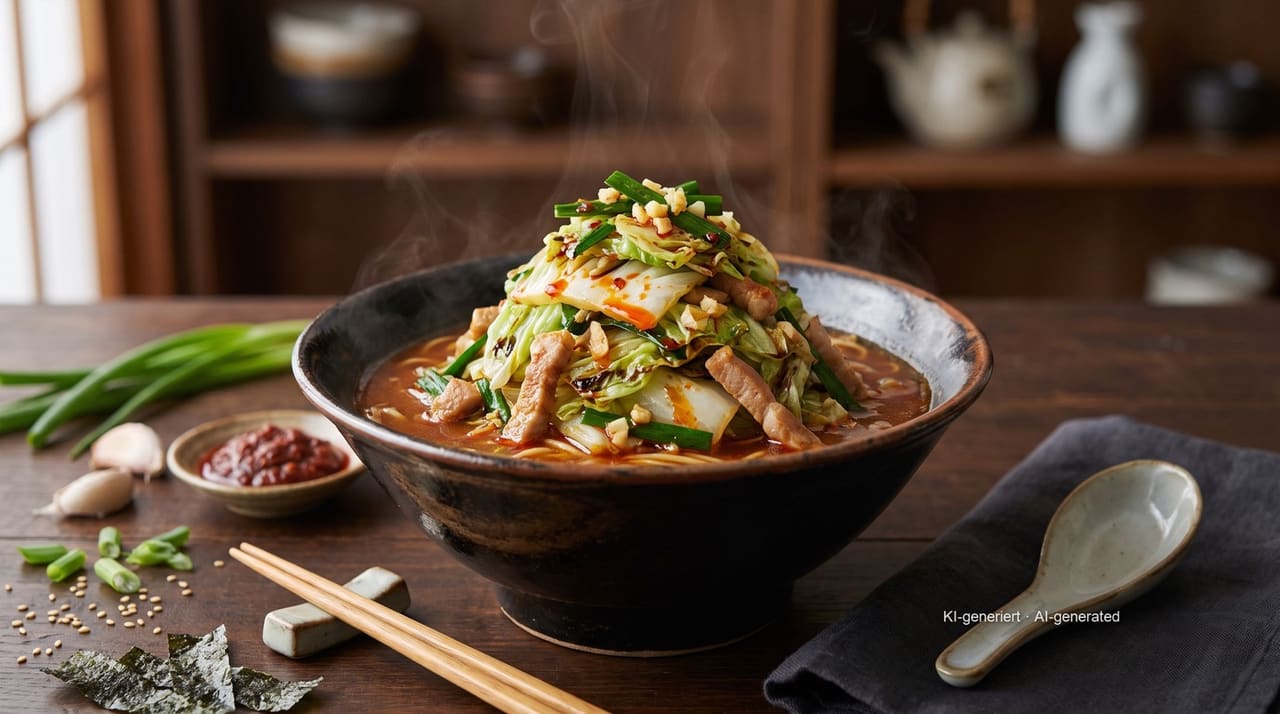
A Japanese classic from Kansai: this robust, red-tinged bowl comes from Tenri in Nara Prefecture, piled high with a mountain of stir-fried Chinese cabbage, pork and garlic chives. Unlike Tanmen — Tokyo-style Shio-Ramen with Stir-fried Vegetables, the broth here is a robust, spicy soy sauce broth made from pork and chicken, the vegetables are mainly Chinese cabbage, and garlic and chilli bean paste add fire. Seared over a high heat, the cabbage turns sweet and tender and lends the broth its mild freshness as it simmers briefly, while the garlic and chilli warm you more with every spoonful.
45
minutes
4
servings
12
Ingredients
Instructions
Wash the Chinese cabbage, cut out the core in a wedge and cut the leaves crossways into 3 cm wide strips. Keep the thick white stalks and the tender green leafy parts separate, because the stalks need longer in the wok. Wash the garlic chives, shake them dry and cut them into 4 cm lengths.
Combine the tonkotsu broth and tori-chintan in a pot and heat slowly until the broth steams, then keep it hot over a low heat. Put plenty of unsalted water on to boil for the noodles in a second large pot. The broth must be hot when it goes into the wok, otherwise it cools down the stir-fry and the cabbage turns watery.
Heat a wok or a wide, heavy pot over a high heat, add the sesame oil and stir-fry the pork shoulder strips in it until browned all over and cooked right through: no pink remains anywhere, and the core has reached 70 °C.
Turn the heat down a little, add the garlic, chilli bean paste and chilli flakes and fry briefly, stirring constantly, until the oil turns deep red and smells strongly of garlic. Fry only until the garlic is light golden, because it tastes bitter when browned too dark; switch on the extractor fan, as the pungent fumes irritate the eyes and throat.
Turn the heat back up to high, add the white cabbage stalks first, then the green leaves after half a minute, and stir-fry everything, tossing constantly, until the Chinese cabbage wilts, turns translucent and takes on a little colour at the edges. Searing it over a high heat makes the cabbage sweet and later gives the broth a delicate roasted aroma.
Fold in the garlic chives and pour in the hot broth — it will sizzle fiercely, and the red browned bits will lift off the bottom. Bring to the boil once and simmer gently until the cabbage is soft but not falling apart and the broth has a reddish-brown sheen.
Stir in the shoyu-tare and pepper and adjust the seasoning; the tare goes in only now because the broth reduces a little as it simmers, and this way the saltiness can be adjusted precisely. Keep the pot warm over the lowest heat without letting it cook any further, so that the cabbage does not fall apart.
Fill four large bowls with hot water, leave them to stand briefly and pour the water out — in a warmed bowl the soup stays hot to the last spoonful. There is no need for tare in the bowls; all the seasoning is already in the pot.
Loosen the noodles with chopsticks in the rapidly boiling unsalted water and cook them: fresh for 1 to 2 minutes, dried according to the packet instructions. Shake them hard in a sieve until hardly any water drips off, so that no cooking water dilutes the broth.
Ladle the hot broth into the four bowls, about 400 ml each, leaving the cabbage and meat in the pot for now.
Add the noodles, lift them once with chopsticks and lay them back down neatly so that they sit loosely in the broth and do not stick together.
Pile the Chinese cabbage, meat and garlic chives on top in a tall mound with a slotted spoon and serve the ramen immediately, while the cabbage is still steaming and has a little bite.
Edited by Peter Hölzer, head chef and master butcher
Similar recipes

Culinse · 45 min
Wakayama-Ramen with Tonkotsu-Shoyu Broth

Culinse · 75 min
Vegetarian Shoyu-Ramen with Shiitake-Dashi
Culinse · 40 min
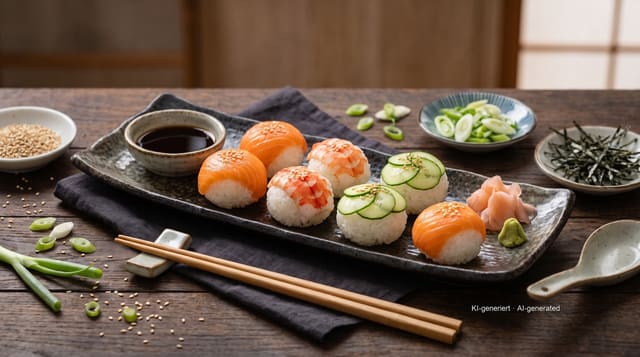
Temari-Zushi — Sushi Balls with Salmon, Prawn and Cucumber

Culinse · 50 min
Battera — Osaka-style Pressed Mackerel Sushi
Culinse · 35 min
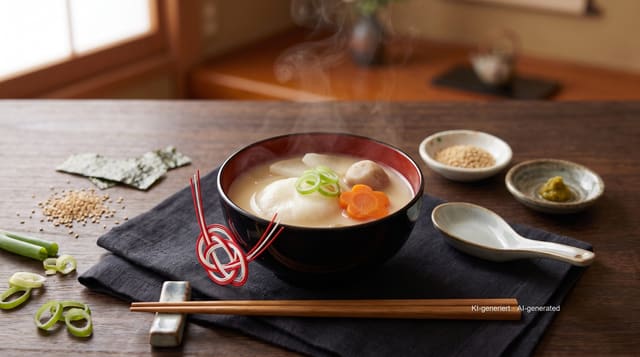
Kansai-style Ozoni — New Year's Soup with White Miso and Mochi

Culinse · 35 min
Nama-Yatsuhashi — Soft Kyoto-style Cinnamon Mochi Triangles

Culinse · 25 min
Ise-Udon — Ise-style Soft Udon with Dark Tare

Culinse · 50 min