JapaneseMain courseLactose-free
TantanmenRamen with Sesame and Spicy Mince
A Japanese classic served all over Japan: tantanmen is the Japanese version of the Sichuan noodle dish dan dan mian — in Japan with plenty of broth, creamy sesame and a heat that warms rather than burns. On top sits crumbly fried, savoury and spicy mince, and red drops of chilli oil glisten on the nutty, light brown broth. The sake in the mince contains alcohol, which cooks off during cooking.
45
minutes
4
servings
19
Ingredients

Instructions
Heat the sesame oil in a large frying pan or wok over a high heat and add the mince. Leave it to fry undisturbed for a minute first so that it takes on colour, then break it into crumbs with the spatula and keep frying until it is cooked right through, shows no pink patches (70 °C) and crackles gently in the fat.
Add the garlic, ginger and chilli bean paste to the meat and fry for 1 minute, stirring, until the oil turns red and smells spicy and fragrant.
Pour in the sake and bring to the boil so that the alcohol cooks off. Stir in 2 tbsp of the soy sauce and the sugar and keep stirring until the liquid has almost completely reduced and the meat is glossy.
Turn the pan down to the lowest heat to keep the meat warm. Heat the tori-chintan with the soy milk in a pot over a medium heat until it steams — it should not boil vigorously, or the soy milk will curdle.
In a bowl, mix the sesame paste with the remaining 6 tbsp soy sauce and the rice vinegar, then gradually stir in a ladleful of hot broth. At first the paste turns stiff and dull, then with more broth it becomes smooth and creamy — this way it disperses later without any lumps.
Stir the sesame mixture into the hot broth and season to taste with salt. From now on the broth must not boil, otherwise it will split and lose its creaminess.
Quarter the pak choi lengthways and wash it thoroughly, as sand often hides between the stalks. Let it steep in the hot broth until the stalks are just tender and the leaves are bright green, then lift it out with a slotted spoon.
Warm four large bowls with hot water, pour the water away and dry the bowls. Put 1 tbsp chilli oil in each bowl — here the sesame mixture in the broth takes on the role of the tare.
Bring plenty of unsalted water to a rolling boil in a large pot, add the noodles, loosen them with chopsticks and cook for 1 to 2 minutes until done but still firm to the bite; cook dried noodles according to the packet instructions.
Tip the noodles into a sieve and shake them vigorously up and down until hardly any water drips off — any remaining cooking water dilutes the creamy broth.
Divide the hot sesame broth between the bowls and stir it briefly with the chilli oil so that red drops float on the light brown surface.
Add the noodles to the broth and arrange them into a neat bundle with chopsticks.
Pile the mince in the centre, arrange the pak choi, peanuts and spring onions in groups alongside and dust everything with a little Sichuan pepper, which tingles lightly on the tongue. Serve immediately.
Edited by Peter Hölzer, head chef and master butcher
Similar recipes

Culinse · 40 min
Niku-Udon — Udon with Simmered Beef

Culinse · 45 min
Nagoya-style Hitsumabushi — Eel on Rice in Three Courses
Culinse · 35 min
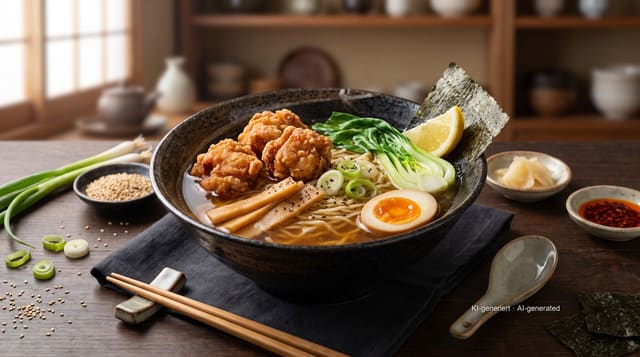
Karaage-Ramen — Ramen with Crispy Chicken

Culinse · 35 min
Okayama-Ramen with Sweet Tonkotsu-Shoyu Broth

Culinse · 70 min
Katsu Kare — Japanese Curry with Breaded Pork Cutlet
Culinse · 110 min
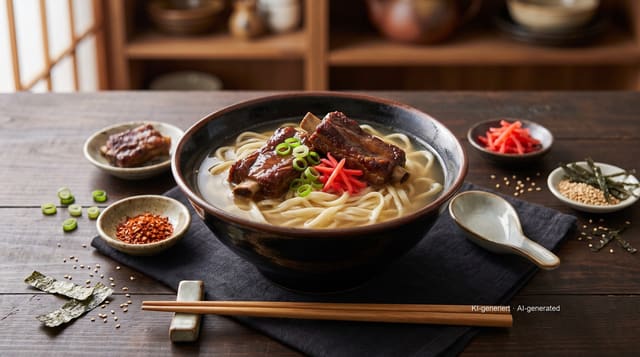
Soki-Soba — Okinawan Noodle Soup with Braised Ribs

Culinse · 40 min
Satoimo no Nimono — Simmered Taro

Culinse · 15 min