JapaneseSide dishVegetarianVegan
Satoimo no NimonoSimmered Taro
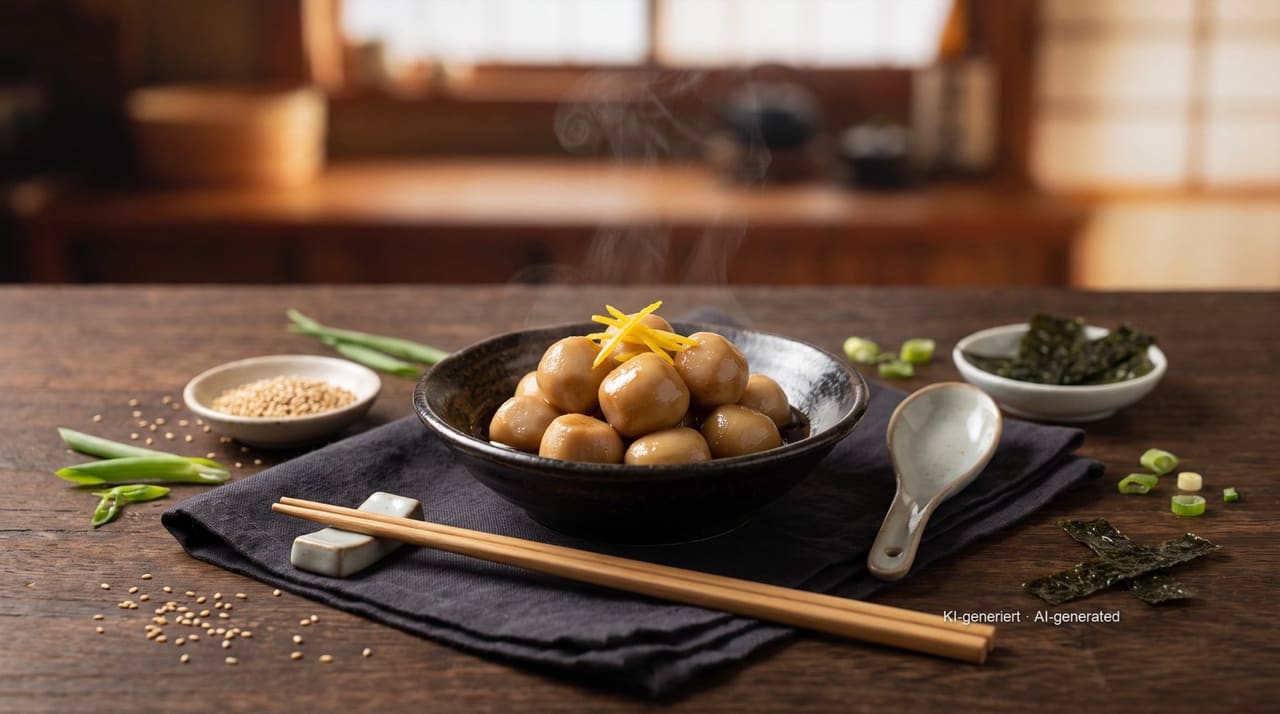
A Japanese classic served all over Japan, especially in autumn, as a side dish with rice and in the bento box: for satoimo no nimono, small taro corms simmer in a kombu and shiitake broth with sake, mirin, sugar and soy sauce until they are creamy and tender inside and shimmer brownish on the outside. Unlike Kabocha no Nimono, simmered pumpkin, it is the small, silky, slightly slippery taro corm that is simmered here — as soft as custard, with a cooking liquid that clings to it glossily at the end. Sake and mirin contain alcohol, which cooks off during cooking.
40
minutes
4
servings
9
Ingredients
Instructions
Scrub the taro corms thoroughly with a brush under running water, then rub them completely dry or leave them to air-dry: dry corms are easier to peel and less slippery. Put on disposable gloves for peeling, as the juice just beneath the skin can make your skin itch badly.
Cut a thin slice off the top and bottom and peel off the skin from top to bottom in six even strips so that the corm becomes hexagonal (roppo-muki); this makes the pieces look attractive and they fall apart less during simmering. Halve large corms so that all the pieces are roughly the same size and are done at the same time.
Put the peeled corms in a bowl, sprinkle them with the salt and rub them vigorously against each other with your hands until a grey, sticky foam forms. Rinse them thoroughly under cold water: the salt draws out the slime, which would otherwise make the cooking liquid cloudy and sticky and stop the seasoning from soaking in.
Bring the water for blanching to the boil in a pot, add the taro and let it boil vigorously; white foam will rise to the surface.
Tip the taro into a sieve and rinse it under cold water until the surface no longer feels slimy but smooth. This short pre-cooking removes the remaining slime, and the corms will later absorb the cooking liquid evenly.
Lay the taro side by side in a single layer in a wide pot of about 22 cm and pour in the kombu-shiitake dashi, sake, mirin and sugar. Bring to the boil and let it bubble briefly until the sharp smell has gone and the alcohol has cooked off. No soy sauce yet: salt added right at the start firms up the surface, and the sugar is absorbed less well.
Cut a circle of baking paper slightly smaller than the pot, cut a small hole in the centre and lay the paper directly on the taro (otoshibuta, a Japanese drop lid). Simmer gently over a low to medium heat; the liquid rises up the paper and moistens the tops as well.
Lift the paper, drizzle the soy sauce evenly over the taro and put the paper back. Do not stir, just swirl the pot gently now and then, and carry on simmering over a medium heat until a wooden chopstick slides easily into the centre and the liquid has reduced to a syrup.
Remove the paper and swirl the pot a few more times so that the corms roll around in the remaining liquid and get a glossy, brownish coating all over. Stay by the pot while you do this: the sugary remainder quickly tips from caramel to bitter, so pull it off the heat as soon as it bubbles and starts to catch on the bottom.
Wash the lemon in hot water, thinly pare off only the yellow zest without the bitter white pith and cut it into very fine strips. Arrange the taro in small bowls, drizzle with the remaining liquid and scatter with the lemon strips; serve warm, lukewarm or cold.
Edited by Peter Hölzer, head chef and master butcher
Similar recipes

Culinse · 45 min
Toriten — Oita-style Chicken Tempura

Culinse · 40 min
Susaki-style Nabeyaki-Ramen

Culinse · 40 min
Sushi Rice — The Basic Recipe

Culinse · 20 min
Dashi — The Basic Japanese Stock

Culinse · 25 min
Chahan — Japanese-style Fried Rice

Culinse · 35 min
Tanuki-Soba — Soba in Hot Broth with Crispy Batter Crumbs

Culinse · 30 min
Menma — Seasoned Bamboo Shoots for Ramen

Culinse · 25 min