JapaneseTohokuMain courseLactose-free
Sendai-Miso-RamenRamen with Red Sendai Miso
A Japanese classic from Tohoku: in Sendai, the capital of Miyagi Prefecture, miso ramen is often seasoned with red, long-matured Sendai miso — this creates a reddish-brown, deeply savoury broth of pork and chicken that smells of garlic and ginger and carries thick, wavy noodles. Unlike Sapporo-style Miso-Ramen, there is no fried mince, no butter or margarine and no sweetcorn in it — the broth relies entirely on the red, strongly salty miso, joined by spinach, bean sprouts and chashu. A splash of sake gives the broth depth and contains alcohol, which cooks off during cooking.
45
minutes
4
servings
16
Ingredients

Instructions
Bring a large pot of plenty of unsalted water to the boil; it is used first for the spinach and later for the noodles. Wash the leaf spinach, pinch off any thick stalks and blanch it in the boiling water for 30 seconds until the leaves wilt and turn bright green. Lift it out with a slotted spoon, refresh it in cold water so that it keeps its colour, squeeze it out firmly and divide it into four portions.
Slice the spring onions into fine rings. Rinse the bean sprouts in a sieve under cold water and, if you like, pinch off the brown root threads — it takes a few minutes, but makes the sprouts more delicate and crunchier.
Warm the sesame oil in a large pot over a low heat, add the garlic and ginger and sweat them, stirring, until strongly fragrant. Nothing must brown, as browned garlic tastes bitter and would overpower the miso.
Pour in the sake — it will sizzle briefly — and let it bubble until the sharp smell of alcohol has gone and it smells only mildly of garlic and ginger.
Pour in the tonkotsu broth and tori chintan and heat over a medium heat until the broth is simmering gently. Add the bean sprouts and cook them until they are hot and slightly translucent but still crunchy.
Lift the bean sprouts out with a slotted spoon and let them drain. Lay the chashu slices in the broth for 30 seconds until the fat shimmers translucent and the meat is warm, then lift them out as well and set them aside.
In a bowl, stir the dark miso paste with the sugar, soy sauce and a ladleful of hot broth until smooth and no lumps remain. Turn the heat down to the lowest setting and stir in the mixture; from now on the broth must not boil, otherwise the miso turns grainy and loses its aroma. The broth is now reddish brown, slightly cloudy and smells deep and savoury.
Fill four large bowls with hot water, leave them to stand briefly and pour the water out, so that the broth stays hot in them. The bowls do not need tare or oil here, as all the seasoning is already in the miso broth.
Loosen the noodles with chopsticks in the rapidly boiling water and cook them: fresh thick noodles for 3 to 4 minutes, dried ones according to the packet instructions, until done but still with some bite. Shake them vigorously in the sieve until hardly any water drips off, so that no cooking water dilutes the broth.
Stir the broth thoroughly once, as the miso tends to settle at the bottom of the pot, and ladle it into the bowls, about 400 ml each.
Add the noodles, lift them once with chopsticks and lay them back down smoothly, so that they lie loosely in the broth and their waves soak up the broth.
Arrange 2 slices of chashu, 2 tbsp menma, a portion of spinach, a small heap of bean sprouts and the spring onion rings in groups on top of each bowl. Sprinkle with the chilli flakes and serve the ramen immediately.
Edited by Peter Hölzer, head chef and master butcher
Similar recipes

Culinse · 30 min
Sendai-style Zunda Mochi — Mochi with Sweet Edamame Paste

Culinse · 60 min
Gyutan-yaki — Sendai-style Grilled Beef Tongue
Culinse · 35 min
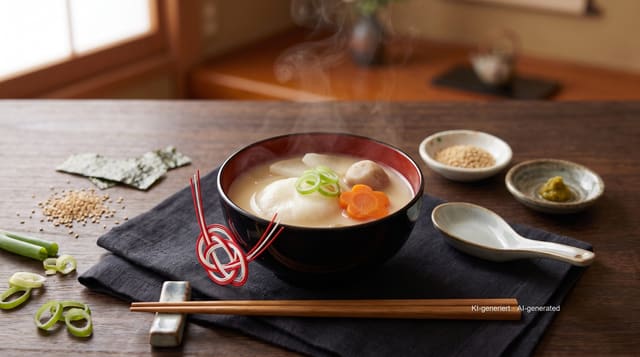
Kansai-style Ozoni — New Year's Soup with White Miso and Mochi

Culinse · 35 min
Akita-style Jumonji-Ramen with Thin Wavy Noodles

Culinse · 180 min
Morioka Reimen — Cold Noodles with Beef Broth and Kimchi

Culinse · 45 min
Yonezawa-Ramen with Chicken and Anchovy Broth

Culinse · 60 min
Imoni — Yamagata-style Taro Stew with Beef

Culinse · 85 min