JapaneseKansaiSoupVegetarianVegan
Kansai-style OzoniNew Year's Soup with White Miso and Mochi
A Japanese classic from Kansai: in Kyoto, the new year begins with ozoni, a smooth, mild soup of sweet white miso paste in which a rice cake (mochi) boiled until soft sits among round slices of daikon, carrot and taro. In Kanto, by contrast, a clear broth with chicken and toasted square mochi goes into the bowl — hardly any dish shows the difference between east and west so clearly. Here the broth is made only from kombu and shiitake, so the soup stays vegetarian and even vegan, and the delicate sweetness of the miso takes centre stage.
35
minutes
4
servings
9
Ingredients

Instructions
Just wipe the kombu with a damp cloth and do not wash it — the white coating is flavour, not dirt. Put the kombu and shiitake in a pot, pour over the cold water, weigh the mushrooms down with a saucer and leave everything to soak until the shiitake are soft and pliable.
Meanwhile, peel the daikon and cut it into round slices 3 mm thin, trimming very large slices down with a round cutter. Peel the carrot and cut it into slices 5 mm thick; if you like, stamp out flowers from them with a small cutter. In Kansai, the vegetables for ozoni are cut round — according to tradition, so that the new year runs smoothly, without any rough edges.
Peel the taro wearing kitchen gloves, as their slime makes the skin itch, and halve larger tubers. Cover them with cold water in a small pot, bring to the boil and boil briskly until foam forms — this releases the slime that would otherwise make the soup sticky.
Drain the taro in a sieve and rinse under cold water until the surface no longer feels slippery. Rinse out the small pot; it will be needed later for the mochi.
Slowly warm the pot with the kombu and mushrooms over a medium to low heat. As soon as small bubbles rise at the edge of the pot, take out the kombu, as it turns bitter and slimy if boiled. Lift out the shiitake, cut off the stalks, slice the caps and return them to the broth.
Add the daikon, carrot and taro to the broth and simmer over a low heat until a wooden skewer slides in without resistance. The broth should only bubble gently so that the round slices keep their shape.
Meanwhile, bring water to the boil in the small pot, add the rice cakes one at a time and simmer over a low heat until they are soft all over, swell slightly and can easily be pressed in with a chopstick. The mochi are cooked separately because their starch would otherwise make the soup cloudy and sticky, and they would stick to the bottom of the pot.
Pull the soup pot off the heat. Put the miso paste in a ladle, add a little hot broth, stir it smooth with chopsticks and stir it into the soup until the soup is creamy and ivory-coloured. From now on, do not let it boil — otherwise the sweet white miso loses its delicate aroma and turns grainy.
Slice the spring onion greens into fine rings. Warm four soup bowls, use a slotted spoon to put a rice cake in each, arrange the vegetables alongside and pour over the hot miso soup. Scatter with spring onions and serve immediately, as the mochi firm up again as they cool.
Edited by Peter Hölzer, head chef and master butcher
Similar recipes
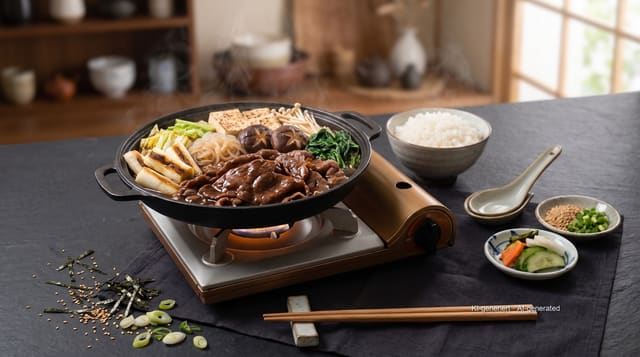
Culinse · 45 min
Kansai-style Sukiyaki — Beef Seared First, Then Braised
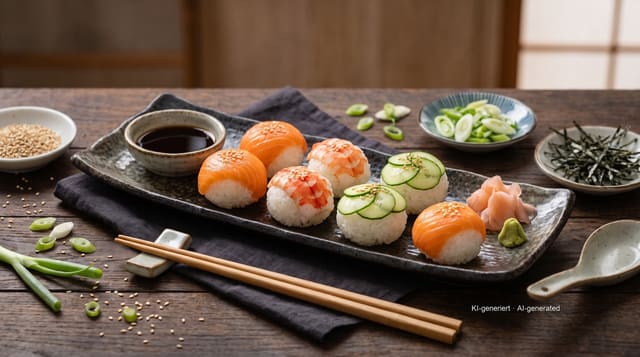
Culinse · 40 min
Temari-Zushi — Sushi Balls with Salmon, Prawn and Cucumber

Culinse · 50 min
Battera — Osaka-style Pressed Mackerel Sushi

Culinse · 45 min
Wakayama-Ramen with Tonkotsu-Shoyu Broth

Culinse · 35 min
Nama-Yatsuhashi — Soft Kyoto-style Cinnamon Mochi Triangles

Culinse · 25 min
Ise-Udon — Ise-style Soft Udon with Dark Tare

Culinse · 50 min
Shabu-Shabu — Beef in Kombu Broth with Two Sauces

Culinse · 50 min