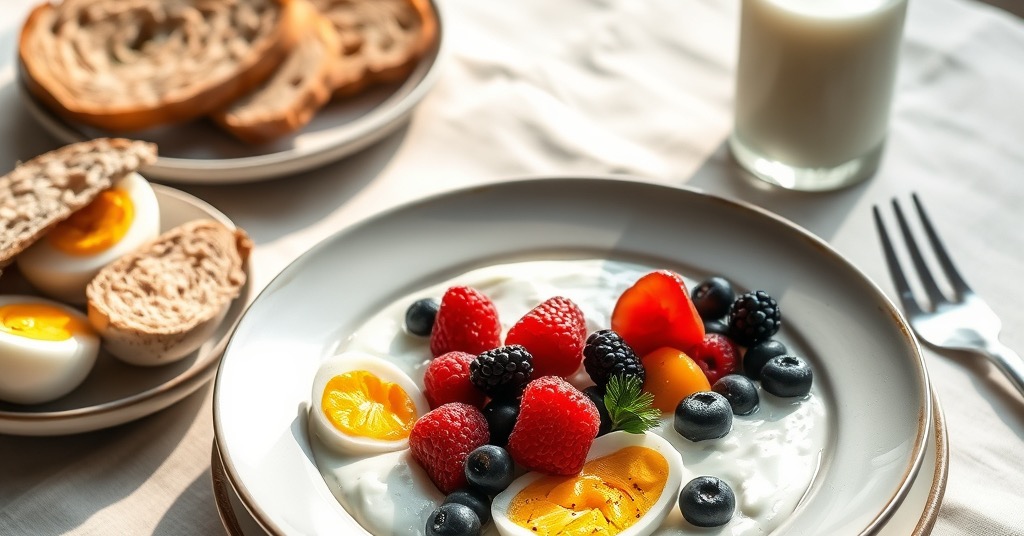
The classic breakfast of a jam roll, a cereal bar, or a croissant grabbed on the way out has one big flaw: it's mostly carbs and almost no protein, which is exactly why you're hungry again two hours later. A high-protein breakfast flips that around. It keeps you full longer, steadies your blood sugar, and helps you hold on to muscle. In this post you'll get 18 concrete ideas that each land above 30 g of protein, an overview of the best protein sources, and a tip for prepping your breakfast for the whole week.
Why protein in the morning?
Protein is the most filling of the three macronutrients. A protein-rich first meal keeps hunger at bay noticeably longer than a carb-heavy one, which makes it far easier to reach lunch without snacking and helps you dodge that mid-morning slump. There's a muscle angle too: after the overnight fast, your body is especially receptive to protein in the morning. If you want to build muscle or hold on to it while cutting calories, it pays to spread your protein evenly across the day rather than piling it all onto dinner. On top of that, protein has the highest thermic effect: your body burns more energy digesting it than it does with fat or carbs.
How much protein belongs in breakfast?
As a rough guide, 20 to 40 g of protein per meal is a sensible range to properly kick-start muscle protein synthesis. For a breakfast that genuinely fills you up and carries you through the morning, 30 g is a solid target, and that's exactly what the ideas below are built around. Your total needs depend on body weight and activity level: if you train regularly or want to build muscle, a common benchmark is roughly 1.6 to 2.0 g of protein per kilogram of body weight per day. You'll find more on that math and matching main meals in our guide to high-protein meals for building muscle.
Plan your week and the shopping list writes itself
Start the free meal planner →18 high-protein breakfast ideas
Every idea is designed so that the listed main ingredients comfortably push you past 30 g of protein. The amounts are per serving. First up, ready in under 5 minutes:
- Skyr bowl with berries and nuts – 250 g skyr, a handful of berries, 20 g nuts; no cooking, done in two minutes.
- Protein shake to go – 300 ml milk or soy drink, 30 g protein powder, one banana; perfect for hectic mornings.
- Savory cottage cheese toast – 200 g cottage cheese on whole-grain bread with tomato, chives, and pepper.
- Quark with oats – 250 g low-fat quark, 40 g rolled oats, a little honey and cinnamon; creamy and fast.
- Egg wrap to go – 3 scrambled eggs in a whole-grain tortilla with a little cheese, quickly rolled up.
Make-ahead / overnight
These ideas are prepped the night before or several days in advance:
- Overnight oats with skyr – 50 g rolled oats, 200 g skyr, 150 ml milk, chia, and berries; set in a jar overnight.
- Protein chia pudding – 30 g chia seeds, 250 ml milk, 1 scoop protein powder; mix the evening before.
- Quark breakfast jars – layers of low-fat quark, berries, and granola; prep three or four jars at once.
- Baked oats with protein powder – oats, egg, protein powder, and banana baked together; portioned out for several days.
- Egg muffins – 6 eggs baked in a muffin tin with spinach, bell pepper, and a little cheese; keep for several days in the fridge.
Vegetarian & vegan
Even without meat – and sometimes fully plant-based – you can clear the 30 g mark:
- Tofu scramble – 200 g tofu with turmeric, veggies, and kala namak; vegan and savory.
- Soy yogurt bowl – 250 g protein-enriched soy yogurt with nuts, seeds, and fruit.
- Lentil breakfast hash – cooked lentils with potatoes and bell pepper in the pan; filling and high in protein.
- Peanut butter porridge with soy drink – oats in soy drink with 1 tbsp peanut butter and a scoop of plant-based protein.
- Chickpea pancakes – pancakes made from chickpea flour, topped savory with veggies.
Savory
For anyone who prefers something hearty in the morning:
- Shakshuka with feta – 2–3 eggs poached in tomato sauce with a little feta; perfect for the weekend.
- Salmon bagel with cream cheese – whole-grain bagel, smoked salmon, cream cheese, red onion; lots of protein, little effort.
- Omelet with chicken and vegetables – 3 eggs with leftover cooked chicken and veggies; a great way to use up meal-prep leftovers.
Breakfast protein sources at a glance
To help you build your own combinations, it's useful to have a feel for how much protein typical breakfast ingredients deliver. These are rough values per usual serving:
- Low-fat quark (250 g): around 32 g
- Skyr (250 g): around 28 g
- Cottage cheese (200 g): around 25 g
- Protein powder (1 scoop, 30 g): around 24 g
- Eggs (each): around 6–7 g
- Tofu (200 g): around 24 g
- Smoked salmon (100 g): around 20 g
- Rolled oats (50 g): around 6 g
- Soy yogurt, protein-enriched (250 g): around 12–15 g
- Nuts (20 g): around 4 g
The logic behind it: one concentrated main source (quark, skyr, eggs, tofu) delivers the bulk, while smaller building blocks (nuts, oats, seeds) round it out. That way you'll hit the 30 g mark almost every time with a single solid base ingredient.
Meal-prep tip: get breakfast ready for the whole week
The most common reason a high-protein breakfast falls apart in everyday life is simply a lack of time in the morning. The fix is the same as for any other meal: prep ahead. On one day, set up three to five jars of overnight oats with skyr, bake a tray of egg muffins, and portion out quark breakfast jars. With just a few minutes of effort you've covered several mornings where all you have to do is open the fridge. If you'd rather skip the planning altogether, you can use Culinse to filter recipes directly by protein content and dietary style and assemble your whole breakfast week from them – automatic shopping list included.
Bottom line
A high-protein breakfast is the simplest way to stay full longer, avoid the mid-morning slump, and spread your daily protein intake evenly. You don't need to cook anything complicated or spend time every morning: a concentrated protein source like quark, skyr, eggs, or tofu will almost always push you past 30 g, and with a little prep on the weekend the whole week is covered. Pick two or three of the 18 ideas that fit your routine and turn them into a habit.
Frequently asked questions
The key questions about a high-protein breakfast:
- How do I hit more than 30 g of protein in the morning? The easiest route is a concentrated main source: 250 g of low-fat quark or skyr already delivers around 28–32 g, and so do three eggs plus a little cheese. Smaller ingredients like nuts or oats top up the total.
- Is a high-protein breakfast good for losing weight? It can help, because protein keeps you full for a long time and cuts down on mid-morning snacking. What ultimately matters for weight loss is your overall energy balance across the day, but a filling breakfast makes a calorie deficit much easier to stick to.
- Can a high-protein breakfast be vegetarian or vegan? Yes. Quark, skyr, cottage cheese, and eggs cover the vegetarian version; for vegan, go with tofu, protein-enriched soy yogurt, legumes, and plant-based protein powder. Several of the ideas above are already meat-free.
- Do I need protein powder for a high-protein breakfast? No. Protein powder is handy when you're in a rush, but it's not a must. With quark, skyr, eggs, tofu, or smoked salmon you'll easily reach your target amount without any powder.
- How long does prepped breakfast keep? Overnight oats and quark jars keep in the fridge for about 3 to 4 days, and egg muffins for roughly 3 to 4 days as well. Let anything baked cool completely before sealing it.