JapaneseMain courseLactose-freeHigh protein
Chikin KatsuBreaded Chicken Cutlet with Shredded Cabbage
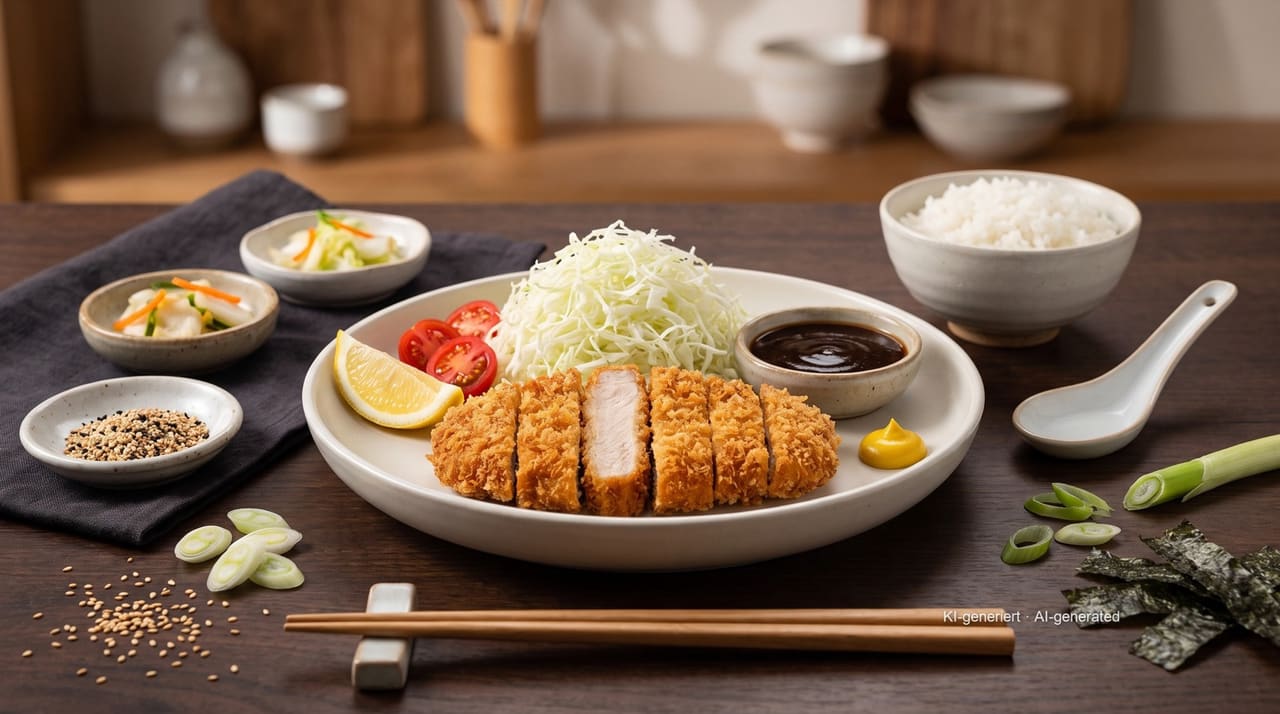
A Japanese classic served all over Japan in canteens, small eateries and family kitchens: Chikin Katsu, the breaded chicken cutlet, is encased in a golden-brown crust of coarse panko that crunches audibly when cut, and underneath it is white, tender and juicy. Unlike Tonkatsu — Breaded Pork Cutlet with Shredded Cabbage and Tonkatsu Sauce, chicken breast is breaded here — pounded flat so that it cooks through in a few minutes and stays juicy inside; and unlike Chicken Nanban — Miyazaki-style Fried Chicken with Tartare Sauce, there is no sweet-and-sour sauce, but the dark tonkatsu sauce instead. It comes with a mound of wafer-thin shredded cabbage, cherry tomatoes, lemon, hot mustard and a bowl of rice.
45
minutes
4
servings
13
Ingredients
Instructions
Cook the rice following the basic recipe and keep it warm in the covered pot. While it cooks, there is enough time for the cabbage and the cutlets.
Remove the outer leaves and the tough stalk from the white cabbage. Stack a few leaves on top of each other, roll them up tightly and cut them into wafer-thin, thread-fine strips with a sharp knife or a mandoline. Put the strips in a bowl of iced water: the cabbage soaks up the water, becomes light and crisp and loses its harsh taste.
Pat the chicken breast fillets dry. If a fillet is very plump at the thick end, cut into that end horizontally to just short of the edge and open it out. Place the fillets one at a time between two layers of cling film and pound them evenly to a thickness of 1.5 cm with a meat mallet or the base of a heavy pan: only if the meat is the same thickness all over will the centre cook through before the edges dry out. Season both sides with salt and pepper.
Put the flour on a flat plate, beat the eggs in a second one and fill a third with the panko. Turn each fillet in the flour and tap off the excess; the flour absorbs the moisture from the surface so that the egg sticks well. Draw the fillet through the egg, let it drip off and lay it in the panko, heap the panko over it from all sides and press it on only lightly so that the coarse flakes stay upright and the crust turns out light.
Pour the oil into a tall, heavy pan with a capacity of at least 3 litres so that it is no more than a third full, and heat to 170 to 180 °C; fine bubbles will then rise steadily from a dry wooden chopstick held in it. From now on, never leave the pan unattended and keep water away from the oil, so keep everything that goes into it dry. If the oil does catch fire, never put it out with water — put a lid on and switch off the hob.
Slide two cutlets into the oil, away from you, and fry for 3 minutes per side, turning once, until the crust is evenly golden brown. At first it bubbles loudly with large bubbles; towards the end the bubbles get smaller and the sound higher and quieter, because hardly any moisture is evaporating from the crust any more.
Lift out the cutlets, hold them upright briefly so that the oil runs off, and leave them to rest on a wire rack so that they stay crisp underneath too; the residual heat carries on cooking them through to the centre. Afterwards, a meat thermometer in the thickest part must show at least 75 °C, the meat must be white inside with no pink spots and the juices must run clear — otherwise return them to the oil briefly.
Fry, rest and check the other two cutlets in the same way. Then switch off the heat under the oil and leave the pan to cool completely on the hob.
Drain the cabbage in a sieve and spin it thoroughly dry in a salad spinner so that no water runs onto the plate and softens the crust. Halve the cherry tomatoes and cut the lemon into wedges. Cut each cutlet crosswise into 2 cm wide strips with a sharp knife, pressing the blade firmly through the crust instead of sawing, so that the coating does not crumble off.
Arrange the strips on four plates in the shape of the whole cutlet, heap a tall mound of shredded cabbage alongside and add the cherry tomatoes and lemon wedges. Put a small dab of hot mustard on the rim of each plate, set out the tonkatsu sauce in small bowls for dipping and serve the rice in bowls alongside. The sauce only goes on the meat at the table, so the crust stays crisp down to the last bite.
Edited by Peter Hölzer, head chef and master butcher
Similar recipes

Culinse · 45 min
Katsu Sando — Cutlet Sandwich with Tonkatsu Sauce

Culinse · 25 min
Kake-Udon — Udon in Hot Broth

Culinse · 45 min
Tebasaki — Crispy Nagoya-style Chicken Wings
Culinse · 35 min
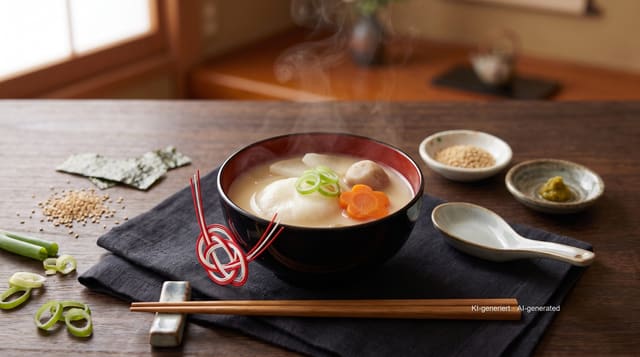
Kansai-style Ozoni — New Year's Soup with White Miso and Mochi

Culinse · 55 min
Chicken Nanban — Miyazaki-style Fried Chicken with Tartare Sauce

Culinse · 15 min
Furikake — Rice Seasoning with Sesame, Nori and Bonito Flakes

Culinse · 35 min
Nagoya-style Taiwan-Mazesoba

Culinse · 45 min