JapaneseKyushuMain courseLactose-free
Kakuni-DonNagasaki-style Braised Pork Belly on Rice
A Japanese classic from Kyushu: according to tradition, braised pork belly, Buta no Kakuni, has Chinese roots in the port city of Nagasaki, having arrived with the trade through its harbour — here it sits in large, glossy, mahogany-brown cubes on rice with braised egg and spinach. Unlike Chashu — Braised Pork Belly for Ramen, the belly here is cut into cubes, first boiled and then braised until the fat is glassy and the meat falls apart under your chopsticks. The braising liquid contains alcohol, which evaporates during cooking.
170
minutes
4
servings
14
Ingredients

Instructions
Cut the pork belly into 8 equal cubes of about 5 cm so that each cube has layers of meat and fat; they will shrink noticeably during braising. Heat a wide, heavy pot without any fat and place the cubes in it fat side down.
Sear the cubes over a medium-high heat until golden brown all over, turning them every 1 to 2 minutes; the fat renders out, sizzles vigorously and smells nutty. Searing adds roasted flavour and helps the cubes hold their shape during the long cooking.
Carefully pour off the rendered fat into a heatproof bowl. Slice the ginger and add it to the cubes with the leek greens and the water, bring to the boil and simmer gently, uncovered, over a low heat. Keep skimming off the scum and fat that rise to the top: parboiling removes excess fat and the strong smell, and afterwards the meat is cooked through to well above 70 °C.
Meanwhile, prick the eggs at the blunt end so that the shells do not crack, lower them with a spoon into a pan of boiling water and hard-boil them until both white and yolk are completely firm.
Plunge the eggs into cold water and peel them. After parboiling, lift the cubes out with a slotted spoon and rinse them briefly under warm water so that no scum clings to them; discard the cooking water with the ginger and leek and rinse out the pot.
Put the dashi, sake, mirin and sugar in the pot, bring to the boil and let it bubble vigorously until the sugar has dissolved and the sharp smell of alcohol has disappeared.
Place the cubes side by side in the liquid, fat side up, and tuck the peeled eggs into the gaps. Lay a circle of baking paper with a small hole in the centre directly on top: this drop lid (otoshibuta) keeps everything covered with liquid so that the meat and eggs take on colour evenly, and steam escapes through the hole. Braise gently over a low heat.
As soon as the cubes are braising, wash, soak and cook the rice following the basic recipe: including soaking, it takes a good hour, so it will be ready at the same time as the meat.
Halfway through the braising time, lift the paper and pour in the soy sauce. In Japan the sugar goes into the pot first because it penetrates the meat more slowly than salt; if the soy sauce went in too early, the meat would firm up and barely absorb the sweetness. Put the paper back on and continue braising until a chopstick slides into the cubes without resistance and the fat looks glassy.
Meanwhile, bring a pan of water to the boil, wash the spinach, pinch off any thick stalks and blanch it for 30 seconds until it wilts and turns bright green. Refresh it in cold water so that it keeps its colour, squeeze it firmly and cut it into 4 cm lengths; slice the spring onions into fine rings.
Remove the paper and let the liquid reduce, uncovered, over a medium heat, basting the meat and eggs with it again and again and turning the eggs once. The liquid is ready when it is glossy and syrupy and throws up large bubbles; from now on watch carefully, because the sugar burns quickly.
Warm four deep bowls (donburi), fill them loosely with the rice and drizzle two spoonfuls of the liquid over each. Place two cubes on top of each, halve the eggs and lay them alongside cut side up, add a small mound of spinach and scatter over the spring onions. Put a small dab of karashi on the rim of each bowl and take only a little of it with each bite, because it is very hot.
Edited by Peter Hölzer, head chef and master butcher
Similar recipes

Culinse · 35 min
Kakuni-Ramen — Nagasaki-style Ramen with Braised Pork Belly

Culinse · 60 min
Nagasaki-style Sara-Udon — Crispy Noodles with Vegetables and Seafood in Sauce
Culinse · 75 min
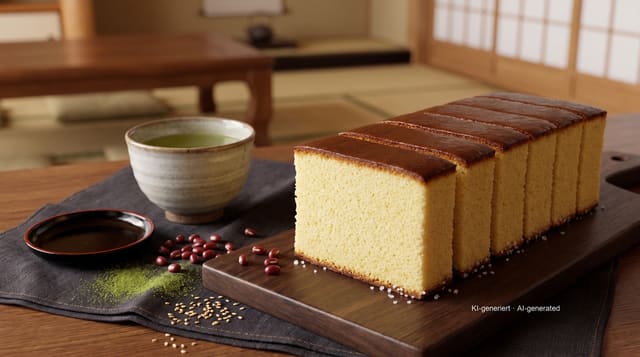
Kasutera — Nagasaki-style Japanese Sponge Cake

Culinse · 55 min
Champon — Nagasaki-style Noodle Soup

Culinse · 70 min
Nagasaki-style Toruko Rice — Cutlet, Spaghetti and Pilaf on One Plate

Culinse · 60 min
Chikuzenni — Fukuoka-style Chicken Braised with Root Vegetables

Culinse · 110 min
Mizutaki — Hakata-style Chicken Hot Pot
Culinse · 45 min