JapaneseKyushuMain courseLactose-freeHigh protein
MizutakiHakata-style Chicken Hot Pot
A Japanese classic from Kyushu: Mizutaki, literally ‘cooked in water’, is the chicken hot pot from Hakata in Fukuoka and is eaten in rounds — first the broth on its own, then the meat with ponzu, then the vegetables and finally rice in the last of the broth. Unlike Tori-Chintan — Clear Chicken Broth for Ramen, the chicken here is boiled hard in pieces on the bone until the broth turns white, and everything comes to the table in the pot. A splash of sake takes away the chicken's strong smell and contains alcohol, which cooks off during cooking.
110
minutes
4
servings
19
Ingredients

Instructions
Bring plenty of water to the boil in a large pan of about 5 litres. Add the chicken pieces and boil them rapidly until the surface turns white and grey scum rises.
Tip the pieces into a sieve and rinse them one by one under cold water, removing any traces of blood and dark bits on the bone with your fingers. This pre-boiling ensures that the broth will later be pure white rather than grey and rank-tasting. Rinse out the pan.
Slice the ginger without peeling it and crush the garlic with the flat of a knife blade. Put the chicken pieces, ginger and garlic into the clean pan with the water and sake, bring to the boil over a high heat and skim off the scum thoroughly once; this also cooks off the alcohol.
Set the lid on half-way and let the broth boil vigorously over a medium to high heat. The bubbling emulsifies the fat and gelatine from the bones with the water until the broth is milky white and smells intensely of chicken. If too much boils away, top up with hot water so that the pieces are always covered.
Meanwhile, for the citrus soy sauce (ponzu), stir the soy sauce, lemon juice and rice vinegar together in a small bowl. Peel the daikon, grate it finely and squeeze it lightly, and slice the spring onions into fine rings. Put the ponzu, daikon and spring onions on the table in small bowls.
Prepare the vegetables and arrange them in groups on a platter: cut the Chinese cabbage into pieces 5 cm wide, the leek diagonally into pieces 1 cm wide and the tofu into eight cubes. Remove the stalks from the shiitake and score a cross into the caps; cut the firm root end off the enoki and separate the mushrooms into small clusters. Peel the carrot and cut it into thin slices; wash the spinach and pinch off any thick stalks.
Fish the ginger and garlic out of the broth and check a piece of chicken: the meat comes away easily from the bone, a thermometer at the bone reads at least 80 °C, and the juices that run out are clear. Transfer the broth and meat to a Japanese clay pot (donabe) or a cast-iron pot of about 3 litres and set it on a table-top burner; without a table-top burner, the pot stays on the hob and is carried to the table for each round.
First round: ladle a little broth into small bowls, season with a pinch of salt and a few spring onion rings and drink it on its own — this shows how rounded and creamy the broth tastes without any further seasoning.
Second round: take the chicken pieces out of the pot and eat them with ponzu, grated daikon and spring onions; the meat is so tender that it can be pulled off the bone with chopsticks.
Third round: lay the carrot, Chinese cabbage, leek, shiitake, enoki and tofu in groups in the simmering broth and cook, covered, until the cabbage is soft and translucent; add the spinach only in the last minute so that it stays bright green.
Eat the vegetables with ponzu and daikon too. For the fourth round, rinse the rice briefly in a sieve under cold water so that the broth does not turn sticky, add it to the remaining broth and simmer gently until the grains have soaked up the broth and everything is velvety.
Season the rice soup (zosui) with salt, sprinkle with the remaining spring onions and ladle it straight from the pot into the bowls — for many, this is the best part of the whole meal.
Edited by Peter Hölzer, head chef and master butcher
Similar recipes

Culinse · 430 min
Hakata-style Tonkotsu-Ramen
Culinse · 30 min
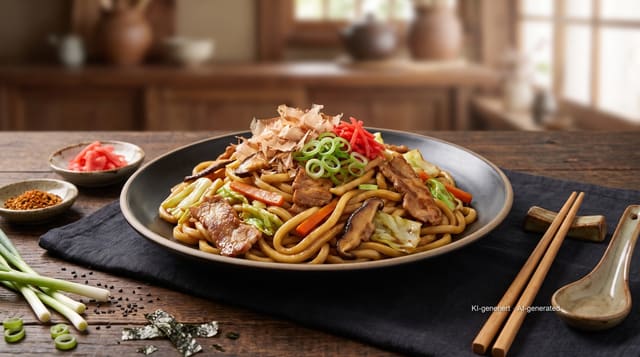
Yaki-Udon — Fried Udon with Pork and Cabbage

Culinse · 35 min
Miyazaki-Ramen with Soft Noodles and Takuan
Culinse · 35 min
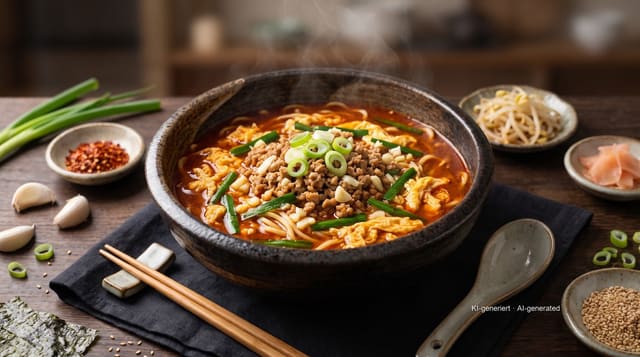
Miyazaki-style Karamen — Spicy Ramen with Garlic and Egg Flakes

Culinse · 40 min
Aroma Oil for Ramen — Negi Oil and Mayu

Culinse · 55 min
Champon — Nagasaki-style Noodle Soup

Culinse · 30 min
Nagahama-Ramen with Ultra-thin Noodles

Culinse · 35 min