JapaneseMain courseLactose-free
OchazukeTea Poured over Rice with Pan-fried Salmon
A Japanese classic that comes to the table all over Japan late in the evening, after a long day or as a quick meal made from leftover rice: for ochazuke, hot green tea is poured over a bowl of rice topped with flaked salted salmon, nori, sesame and a dab of wasabi. The tea warms the rice, draws the seasoning out of the salmon and toppings and becomes a light, fragrant broth that is slurped from the bowl together with the rice. Serves 4.
25
minutes
4
servings
10
Ingredients

Instructions
Pat the salmon fillet dry, feel for bones with your fingers and pull them out with tweezers. Sprinkle the salmon evenly all over with the salt and leave it on a plate until fine droplets appear: the salt draws out water and the slightly fishy smell and seasons the flesh right through — this is how salted salmon (shiozake) is made, a classic in Japan for breakfast as well as for ochazuke.
Pat the salmon well with kitchen paper and fry it in a non-stick frying pan without any fat over a medium heat, skin side or smooth side down first, turning it halfway through. It is cooked when the flesh is pale pink and opaque all the way through and flakes easily with a fork; the core temperature is then 62 to 65 °C.
Leave the salmon to cool a little, remove the skin and any bones you missed, and pull the flesh apart with two forks into coarse, juicy flakes.
Cut the nori sheets with dry scissors into fine strips about 3 cm long. Slice the spring onions into wafer-thin rings.
Divide the rice between four bowls, filling them loosely without pressing it down, so that the tea can later flow between the grains. Warm rice from the day before in the microwave or in a sieve over steam first, otherwise it will cool the tea down too much.
Set the salmon in the centre of each bowl, lay the nori strips and spring onions alongside and scatter over the sesame seeds, rubbing them lightly between your fingers to bring out more of their aroma. Put the bonito flakes on top and place a small dab of wasabi paste at the edge.
Bring the water to the boil. For sencha, pour the water into a second, cold jug and wait briefly until it has cooled to about 80 °C — boiling water makes green tea bitter; hojicha, on the other hand, can take water at a rolling boil. Put the tea leaves in a teapot, pour over the hot water and leave to steep.
Pour the tea through a fine sieve into a jug, down to the last drop, as that is the strongest. Carefully pour the hot tea in at the edge of each bowl until the rice is about two thirds covered; poured over the centre, it would wash away the nori and bonito flakes.
Serve immediately: stir the wasabi into the tea with chopsticks to taste, lift the bowl to your mouth and push the rice, salmon and tea in with the chopsticks — slurping is expressly allowed.
Edited by Peter Hölzer, head chef and master butcher
Similar recipes

Culinse · 80 min
Onomichi-Ramen with Anchovy Dashi

Culinse · 25 min
Fukui-style Oroshi Soba — Cold Soba with Grated Daikon

Culinse · 45 min
Onigiri — Rice Balls with Three Fillings

Culinse · 10 min
Gomashio — Sesame Salt

Culinse · 35 min
Goya Champuru — Okinawa-style Bitter Melon with Tofu and Egg
Culinse · 50 min
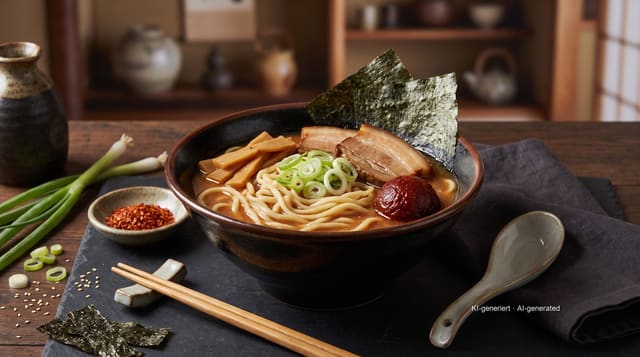
Akayu-Ramen with a Spicy Miso Ball
Culinse · 35 min
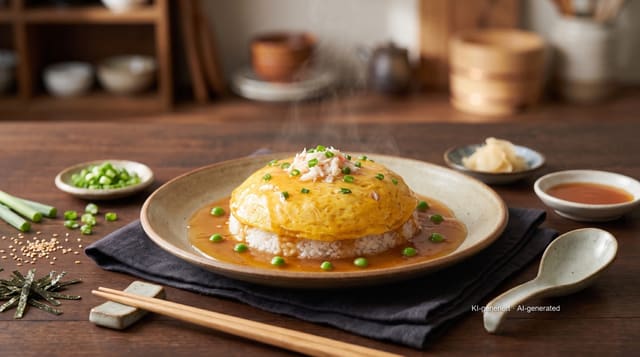
Tenshinhan — Crab Omelette on Rice with Sweet and Sour Sauce
Culinse · 50 min