JapaneseSide dishVegetarianVegan
NamasuSweet-and-sour Daikon and Carrot in Red and White
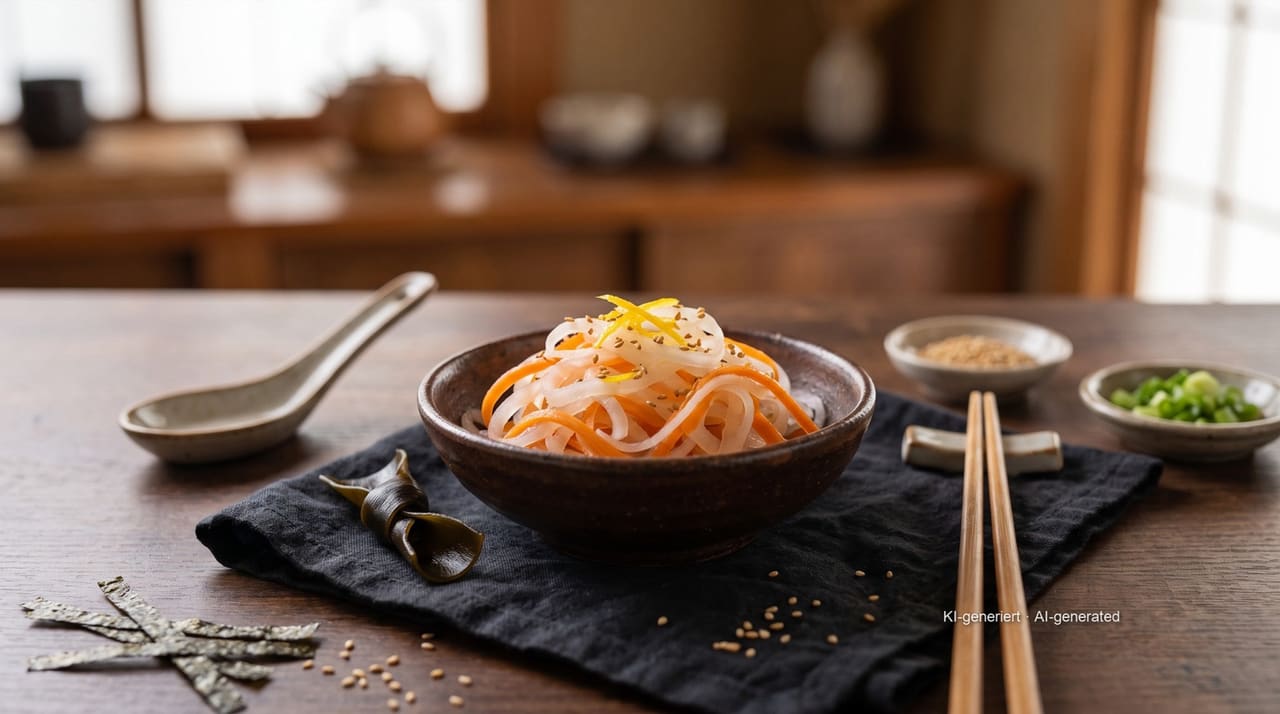
A Japanese classic served all over Japan at New Year: Kohaku Namasu is part of osechi cuisine, the New Year dishes, and glows in red and white, by tradition the colours of good fortune. Unlike Daikon no Amazuzuke — Sweet-and-sour Pickled Daikon, Namasu in red and white is the New Year dish: fine strips of daikon and carrot, only briefly salted and steeped in mild vinegar — the side dish that no osechi box at New Year is without. After ten minutes in salt and half an hour in sweet-and-sour rice vinegar with kombu and lemon zest, the strips are tender and crunchy at the same time, mildly sweet, fresh and pleasantly sour.
20
minutes
4
servings
9
Ingredients
Instructions
Peel the daikon, removing the fibrous layer directly beneath the skin as well so that the strips turn out tender. Cut the daikon into 5 cm lengths, slice these lengthways into 2 mm thin slices and then, fanned out and slightly overlapping, cut the slices lengthways into matchstick-fine strips; in Japan this cut is called sengiri. Cut along the grain, the strips stay crunchy and do not break later when squeezed.
Peel the carrot and cut it the same way into 5 cm long, matchstick-fine strips, if anything a little finer than the daikon, as it is harder. This gives roughly one part red to five parts white: the daikon remains the main element, and the carrot adds the bright splashes of colour.
Toss the daikon and carrot loosely with the salt for salting in a bowl using your fingertips and leave to stand. The salt draws water and the sharp note out of the daikon, the strips become soft and pliable and can later absorb the vinegar instead of diluting it.
Meanwhile, for the sweet-and-sour vinegar (amazu), stir the rice vinegar, sugar and the salt for the vinegar together in a second bowl until the sugar has dissolved completely and nothing grates on the bottom of the bowl any more. Taste with a spoon: the vinegar should taste rounded and distinctly sweet and no longer sting your nose.
Wipe the kombu with a dry cloth, but do not wash it, as the white coating on the surface carries the flavour. Use a vegetable peeler to pare the yellow zest very thinly from the lemon, without the bitter white pith underneath, and cut it into fine strips; set a few strips aside for garnishing.
Squeeze the daikon and carrot firmly with both hands, a portion at a time, until hardly any more liquid comes out, and pour away the salty water. The strips now feel soft and supple, and the volume has visibly shrunk.
Add the squeezed vegetables to the vinegar, add the kombu and the remaining lemon zest and toss everything loosely with clean chopsticks until every strip is moistened. Leave to steep in the fridge, covered, and toss once halfway through: the kombu releases a fine, rounded savouriness, the lemon zest a fresh fragrance.
Remove the kombu; it has given up its flavour. Lift the Namasu out of the vinegar with chopsticks, let it drain briefly and arrange it in small, loose mounds in little bowls. Crush the sesame seeds lightly between your fingers so that they are more fragrant, sprinkle them over and lay the reserved lemon zest on top.
Edited by Peter Hölzer, head chef and master butcher
Similar recipes

Culinse · 35 min
Fukagawa-Meshi — Tokyo-style Rice with Clams
Culinse · 10 min
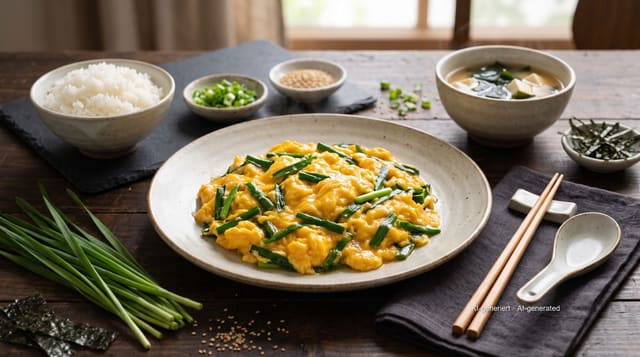
Niratama — Scrambled Eggs with Garlic Chives

Culinse · 20 min
Hotate Bata-yaki — Hokkaido-style Pan-fried Scallops with Soy Sauce

Culinse · 5 min
Natto Gohan — Rice with Fermented Soybeans

Culinse · 70 min
Kyoto-Shoyu-Ramen with Kujo Spring Onions

Culinse · 40 min
Kaki Fry — Hiroshima-style Breaded Oysters

Culinse · 60 min
Tendon — Tempura on Rice

Culinse · 35 min