JapaneseSide dishVegetarianVegan
Kiriboshi Daikon no NimonoSimmered Dried Radish
A Japanese classic served all over Japan as simple home cooking, and in Kyoto counted among the obanzai, the small everyday dishes: dried strips of radish (kiriboshi daikon) are soaked and then simmered with carrot and a deep-fried tofu pouch (abura-age) in a broth made from kombu and shiitake until they have absorbed all of the liquid. Drying has made the radish sweet and deep in flavour, it has a pleasantly firm bite, and the tofu strips are juicy and soaked through. Sake and mirin contain alcohol, which cooks off during cooking.
45
minutes
4
servings
10
Ingredients

Instructions
Put the dried radish in a bowl, cover it with cold water and knead it vigorously with your hands as if washing laundry, then pour away the cloudy water — this removes dust and dried residue. Pour the 500 ml of fresh water over it and leave it to soak until the strips are soft and pliable and have swollen to several times their size.
Squeeze the radish out firmly with both hands, a portion at a time, catching and keeping the pale yellow, sweet-smelling soaking water. Cut the strips on a board into pieces about 4 cm long so that they are easy to eat with chopsticks later.
Peel the carrot and cut it into 4 cm long, matchstick-thin strips so that they match the radish in shape and cooking time.
Put the tofu pouch in a sieve and pour boiling water over it: this rinses off excess frying fat and helps the pouch absorb the liquid better. Squeeze it lightly, halve it lengthways and cut it crosswise into 5 mm wide strips. If you are using firm tofu instead, just pat it dry and cut it into thin strips.
Heat the sesame oil in a medium-sized pot over a medium heat and fry the radish and carrot in it, stirring, until everything is glossy with oil and smells nutty; the small amount of oil gives depth to this lean dish.
Mix in the tofu strips and pour in the kombu-shiitake dashi or 300 ml of the soaking water, along with the sake, mirin and sugar. Bring to the boil and let it bubble briefly so that the alcohol cooks off, then stir in the soy sauce — the sugar goes in first because it is absorbed more slowly than the salt in the soy sauce.
Cut a circle of baking paper slightly smaller than the pot, cut a small hole in the centre and lay the paper directly on the vegetables (otoshibuta, a Japanese drop lid). Simmer gently over a medium to low heat until almost all the liquid has been absorbed and only a little remains at the bottom of the pot; stir once in between.
Remove the paper and leave the vegetables to cool a little in the pot so that they absorb the remaining liquid and become even more flavourful. Serve warm, at room temperature or cold in small bowls.
Edited by Peter Hölzer, head chef and master butcher
Similar recipes

Culinse · 30 min
Wafu-Steak — Beef Steak with Soy Sauce, Garlic and Daikon

Culinse · 25 min
Ochazuke — Tea Poured over Rice with Pan-fried Salmon

Culinse · 55 min
Tsukemen — Ramen for Dipping

Culinse · 180 min
Morioka Reimen — Cold Noodles with Beef Broth and Kimchi
Culinse · 45 min
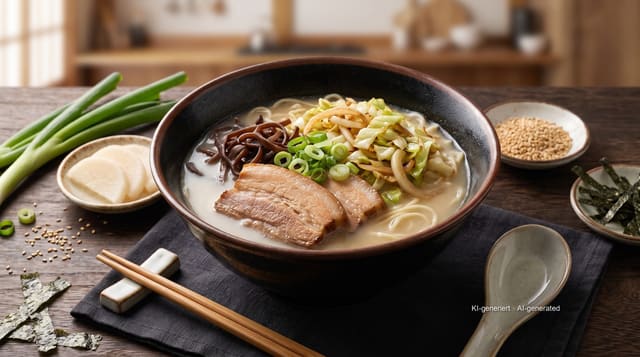
Kagoshima-Ramen with Tonkotsu and Chicken Broth

Culinse · 40 min
Imagawayaki — Filled Pancake Rounds with Bean Paste

Culinse · 170 min
Rafute — Okinawa-style Pork Belly in Soy Sauce and Sugar
Culinse · 75 min