JapaneseKantoMain courseLactose-free
TsukemenRamen for Dipping
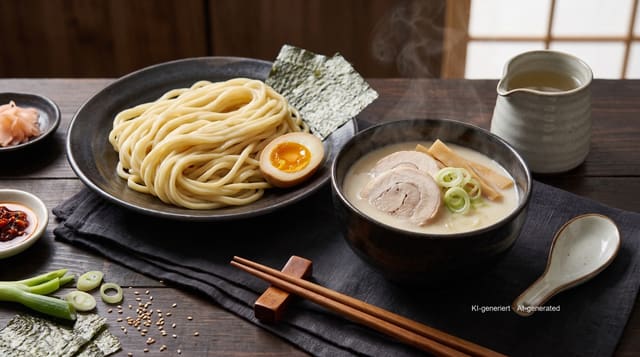
A Japanese classic from Kanto: tsukemen were invented in Tokyo and are ramen for dipping — the thick noodles arrive cold on a plate, the hot, concentrated broth in a small bowl, and every bite is dipped. The dipping broth of pork bones, chicken, anchovies and bonito is thick, robustly salty and slightly tangy, so that enough flavour clings to the cool, firm noodles. At the end, the rest of the broth is thinned with hot dashi and drunk.
55
minutes
4
servings
15
Ingredients

Instructions
Pinch the heads off the dried anchovies and pick out the dark belly with the innards, because both make the broth bitter.
Slowly heat the tonkotsu broth and tori-chintan with the anchovies in a pot and let them steep gently over a low heat without letting the broth boil vigorously — soon it smells strongly of the sea.
Sprinkle in the bonito flakes, pull the pot off the heat and leave the flakes to steep until they have soaked up the liquid and sink to the bottom. They should not steep any longer, otherwise the broth will taste bitter and fishy.
Pour the broth through a fine sieve into a clean pot without pressing the fish remains, otherwise bitter compounds will get into the broth.
Stir in the shoyu-tare, rice vinegar, sugar and chilli flakes and adjust the seasoning: the dipping broth must taste noticeably saltier and a little tangier than a ramen broth, because the cold noodles pick up only a little of it when dipped.
Cut the chashu slices into cubes of about 1 cm and add them to the dipping broth with the menma; keep the broth hot over a low heat. Slice the spring onions into fine rings, halve the ajitama lengthways and halve the nori sheets with scissors.
In a large pot, bring plenty of unsalted water to a rolling boil and cook the noodles in it for 4 to 5 minutes until done but still distinctly firm to the bite; dried noodles according to the packet instructions. For tsukemen you allow more noodles than for ramen, because here they are the main event.
Tip the noodles into a sieve and rinse them under cold running water, rubbing them vigorously with your hands until they no longer feel slippery — this removes the starch and makes the noodles firm and glossy. Drain them well and shake them hard so that no water dilutes the dipping broth.
Divide the noodles loosely between four plates and add half an ajitama, cut side up, and two nori halves to each.
Warm four small bowls with hot water and pour it out. Heat the dipping broth vigorously once more until it briefly comes to the boil, ladle it piping hot into the bowls with the chashu and menma and scatter the spring onions over the top.
Serve immediately: pick up a small bundle of noodles with chopsticks, dip it halfway into the hot broth and eat it straight away — fish the chashu cubes and menma out of the bowl in between.
While everyone is eating, heat the dashi in a small pan. At the end, pour the hot dashi into the remaining broth in each bowl until it tastes like a mild soup, and drink it up — this thinning is called soup-wari.
Edited by Peter Hölzer, head chef and master butcher
Similar recipes
Culinse · 50 min
Tori-Paitan-Tsukemen — Dipping Ramen with Creamy Chicken Broth

Culinse · 45 min
Miso-Tsukemen — Dipping Ramen with Thick Miso Broth

Culinse · 25 min
Vegan Abura Soba — Brothless Ramen with Smoked Tofu

Culinse · 55 min
Wantan-men — Tokyo-style Shoyu-Ramen with Prawn Wantan

Culinse · 25 min
Abura Soba — Ramen without Broth

Culinse · 60 min
Tendon — Tempura on Rice

Culinse · 45 min
Yokohama-style Iekei-Ramen

Culinse · 50 min