JapaneseSide dishVegetarianVegan
RayuJapanese Chilli Oil
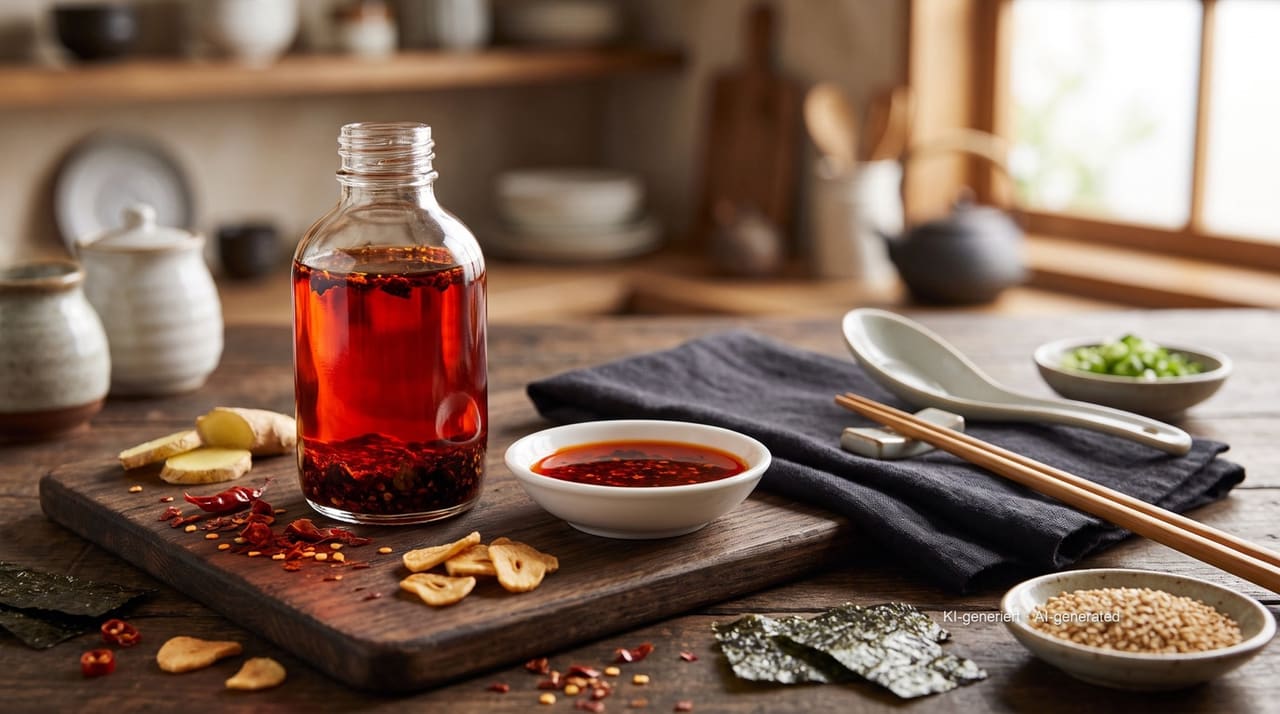
A Japanese classic that stands on every table in a little bottle in ramen and gyoza restaurants all over Japan: rayu is bright red chilli oil made from neutral oil and sesame oil, gently flavoured with garlic, ginger and spring onion and then poured hot over coarse chilli flakes. It tastes nutty, fruity and pleasantly hot, and just a few drops bring a dip or a noodle soup to life. In the recipe Gyoza — Pan-fried Dumplings with Pork and Cabbage, a teaspoon of it goes into the dip, and on Tantanmen — Ramen with Sesame and Spicy Mince it gleams as a red sheen on the broth; there it is bought ready-made, while this is the homemade version, which keeps for two weeks in the fridge.
25
minutes
8
servings
10
Ingredients
Instructions
Put the chilli flakes, sugar, salt and sesame seeds in a heatproof ceramic or stainless steel bowl that holds at least 1 l, as the oil foams up high when it is poured on. Drizzle the soy sauce over and stir with a dry spoon until the flakes are evenly moist and dark red: moist flakes do not burn in the hot oil but release their colour and aroma instead. Set the bowl on a wooden board next to the hob.
Peel the garlic and cut it into thin slices; wash the ginger and cut it, unpeeled, into thin slices. Cut the spring onion into 3 cm pieces. Pat everything thoroughly dry with kitchen paper, as every drop of water makes hot oil spit.
Pour the neutral oil and sesame oil into a small, tall saucepan and put the garlic, ginger and spring onion into the cold oil. When the oil and aromatics warm up slowly together, the garlic, ginger and onion release their fragrance gradually instead of burning on the outside.
Heat the oil slowly over a low to medium heat until the garlic is pale golden, it smells strongly fragrant and a kitchen thermometer shows 130 to 150 °C. Without a thermometer, a dry wooden chopstick helps: if fine bubbles rise steadily from it, the oil is hot enough; if it bubbles violently, it is too hot. Do not leave the pan unattended for a moment and never heat the oil above 160 °C.
Pull the pan off the heat and lift out the garlic, ginger and spring onion with a slotted spoon before the garlic turns brown. In the hot oil it would carry on darkening and taste bitter, and without the pieces the oil keeps more safely.
Slowly pour half of the hot oil over the chilli flakes, holding the pan away from your body: it sizzles, foams up high and immediately smells fruity and hot. Stir with a long-handled spoon until the foam subsides, then pour in the rest of the oil and stir again. Poured in two portions, the oil does not foam over the rim of the bowl and the flakes do not get too hot all at once.
Leave the chilli oil to cool completely in the bowl: it will then glow deep red, and the flakes will settle at the bottom.
Transfer the rayu, flakes and all, to a jar that has been rinsed with boiling water and dried completely, seal it and put it in the fridge. The flakes continue to release colour and heat; if you want clear oil, skim it off the top, and if you like it stronger, stir it before use.
Edited by Peter Hölzer, head chef and master butcher
Similar recipes

Culinse · 75 min
Shokupan — Japanese Milk Bread

Culinse · 50 min
Subuta — Japanese-style Sweet-and-sour Fried Pork

Culinse · 30 min
Nasu Dengaku — Grilled Aubergine with Miso Glaze

Culinse · 25 min
Ika-Karaage — Japanese-style Deep-fried Squid Rings

Culinse · 10 min
Yamitsuki Kyabetsu — Izakaya-style White Cabbage with Sesame Oil and Salt

Culinse · 35 min
Akita-style Jumonji-Ramen with Thin Wavy Noodles

Culinse · 45 min
Hiyashi Chuka — Cold Ramen with Summer Vegetables
Culinse · 20 min