JapaneseMain courseLactose-free
NikujagaSimmered Beef with Potatoes
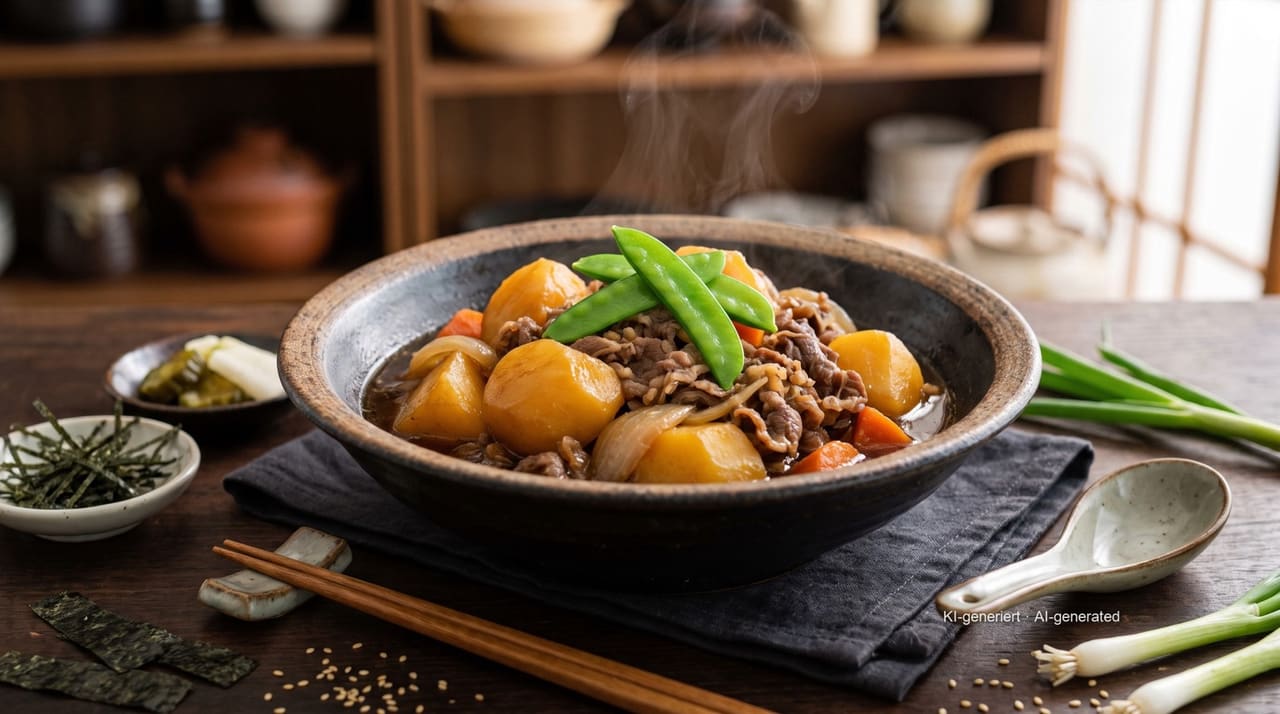
A Japanese classic that comes to the table all over Japan: Nikujaga, literally ‘meat and potatoes’, is the ultimate home-style dish and, for many, the taste of their mother's cooking (ofukuro no aji). According to tradition, it was invented for the navy, and the port cities of Maizuru and Kure still argue to this day about where it was first cooked. Wafer-thin beef, as used in Kansai (in Kanto it is often pork), simmers with potatoes, onion and carrot in dashi, soy sauce and sugar until the potatoes are glossy and have soaked up the sweet and salty liquid — sake and mirin contain alcohol, which cooks off during cooking.
55
minutes
4
servings
11
Ingredients
Instructions
Peel the potatoes and halve or quarter them depending on their size to make pieces of about 5 cm. Bevel the sharp edges all round with a vegetable peeler — in Japan this is called mentori: rounded pieces have no edges that can break off during simmering, so they stay whole and the liquid stays clear. Put the pieces in cold water so that some of the starch comes off and they do not catch on the bottom of the pot later.
Peel the onion and cut it into 1 cm wedges. Peel the carrot and cut it diagonally into bite-sized pieces, giving it a quarter turn after each cut (rangiri) — the many cut surfaces soak up the liquid well. Cut the beef into pieces about 5 cm wide.
Heat the oil in a wide pot of about 24 cm over a medium to high heat. Add the beef — it should sizzle immediately — pull it apart with chopsticks and fry until it is no longer red and smells nicely browned.
Add the onion, carrot and well-drained potatoes and fry them with the meat, turning, until everything is glossy with fat and the edges of the potatoes turn translucent. The thin film of fat helps the potatoes keep their shape during simmering and gives the dish depth.
Pour in the dashi, sake and mirin and bring to the boil; the liquid only comes about two thirds of the way up, and that is how it should be. Skim off the grey foam that now rises with a spoon so that the liquid tastes clear and clean. Let the liquid boil vigorously so that the alcohol cooks off.
Sprinkle in the sugar and reduce the heat to medium-low — according to the Japanese seasoning rule, sugar goes in before soy sauce because it is absorbed more slowly than salt. Cut a circle of baking paper slightly smaller than the pot, cut a small hole in the centre and lay the paper directly on the food (otoshibuta). The liquid now rises up the paper and moistens the pieces on top as well.
Briefly lift the paper, drizzle the soy sauce evenly over everything and lay the paper back on. Simmer gently until a chopstick slides into the potatoes without resistance and only a little glossy, brownish liquid is left in the pot. Gently shake the pot from time to time instead of stirring, so that the potatoes do not break.
Meanwhile, string the mangetout. Blanch them in a small pot of boiling water until bright green — green beans need about 4 minutes — and refresh them in cold water so that they keep their colour and bite.
Take the pot off the heat, remove the paper and put the lid on. Leave the nikujaga to rest: it is only as it cools that the potatoes really absorb the liquid and turn light brown and savoury right to the centre.
Divide the meat, potatoes and vegetables between deep bowls with a little of the liquid and lay the mangetout on top — their fresh green glows against the amber potatoes.
Edited by Peter Hölzer, head chef and master butcher
Similar recipes

Culinse · 35 min
Kakuni-Ramen — Nagasaki-style Ramen with Braised Pork Belly

Culinse · 60 min
Chanko-Nabe — The Sumo Wrestlers' Hotpot

Culinse · 35 min
Banshu-Ramen with Sweet Shoyu Broth

Culinse · 55 min
Ishikari-Nabe — Hokkaido-style Salmon Hotpot with Miso

Culinse · 30 min
Instant Ramen, Properly Upgraded — From the Packet, Just Like at a Ramen Shop

Culinse · 90 min
Sapporo-style Soup Curry — Curry Soup with Chicken Leg and Vegetables

Culinse · 90 min
Kurume-Ramen — The Original Tonkotsu

Culinse · 20 min