JapaneseMain courseLactose-free
Negi-Miso-RamenMiso Ramen with a Mountain of Spring Onions and Minced Meat
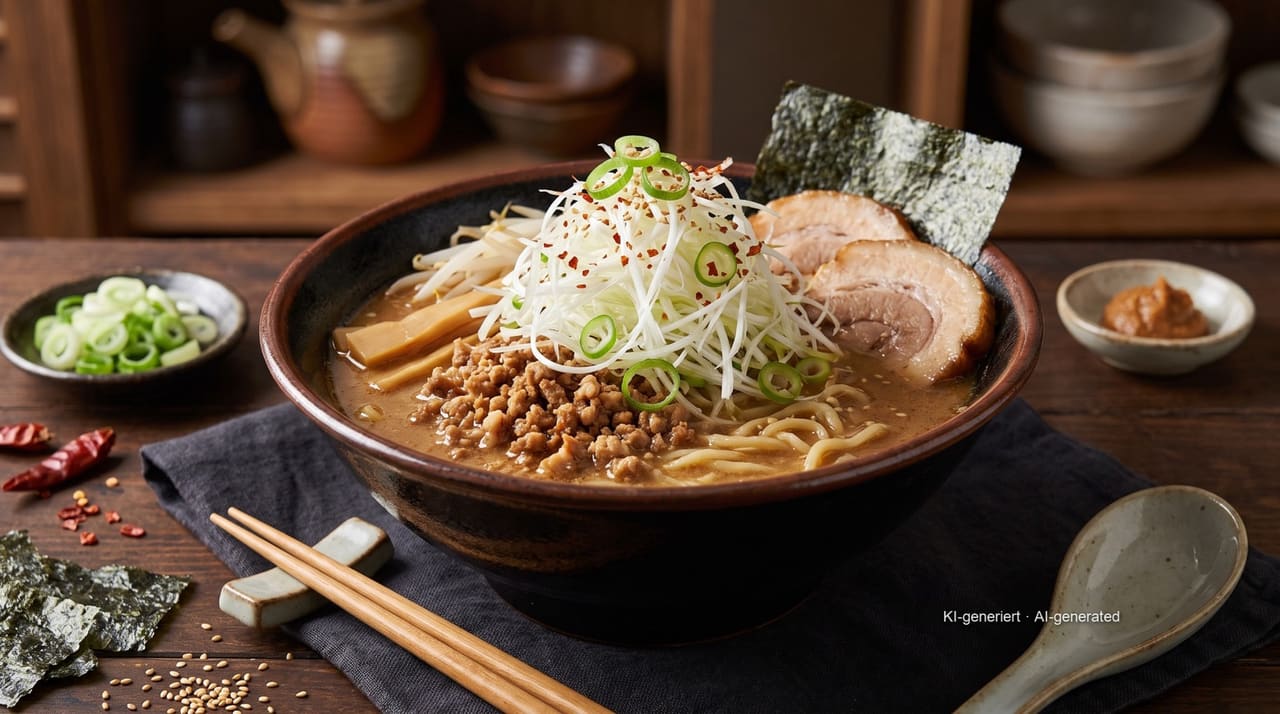
A Japanese classic served all over Japan: Negi-Miso-Ramen is on the menus of miso ramen shops from Sapporo to Tokyo, and the bowl takes its name from negi, the Japanese long onion. Unlike Negi-Ramen — Shoyu Ramen with a Mountain of Spring Onions, the mountain of leek and spring onions here sits on a hearty miso broth with fried minced meat — dressed with sesame oil, chilli and sesame seeds so that it suits the broth. As you eat, the crunchy, red-speckled mountain gradually sinks into the hot, nutty and savoury broth, softens and gives it freshness and a gentle heat.
45
minutes
4
servings
18
Ingredients
Instructions
Cut the white part of the leeks into 5 cm lengths and slit each piece lengthways to the centre. Press out the greenish core, chop it finely and set it aside for the minced pork. Lay the white layers flat on top of each other and use a very sharp knife to cut them lengthways into wafer-thin strips: this is shiraga negi, literally ‘white-hair leek’, and together with the spring onions it replaces the long Japanese negi.
Put the leek strips into a bowl of cold water: there they lose their biting sharpness, turn crisp and curl into fine ringlets at the ends.
Meanwhile, trim the spring onions and slice them into fine rings; peel and finely grate the garlic and ginger. Put a large pot with plenty of unsalted water for the noodles on to heat.
Heat the sesame oil for the minced pork in a second large pot or a wok over a high heat and add the minced pork. First fry it undisturbed for one minute so that it takes on colour, then break it up into crumbs with a spatula and fry until completely cooked through, with no pink visible anywhere (70 °C). In the last minute, mix in the garlic, ginger and chopped leek cores until very fragrant — added any earlier, the garlic would burn and turn bitter.
Pour in the tonkotsu broth and tori chintan, scrape the browned bits off the bottom of the pot with a wooden spoon and heat everything over a medium heat until the broth is steaming and small bubbles rise at the edge. The milky pork broth brings body and creaminess, the clear chicken broth keeps the bowl light.
Put the miso tare in a bowl, pour in a ladleful of hot broth and whisk until smooth, with no more lumps visible. Stir the mixture into the pot and from now on only keep the broth hot without letting it boil again — at a rolling boil, miso loses its aroma and turns grainy. Add the bean sprouts, leave them in the broth until hot but still crunchy, and lift them out with a slotted spoon.
Lay the chashu slices in the hot broth for 30 seconds until the fat looks glassy and the meat is warm, then lift them out and set aside.
Drain the leek strips and spin them dry in a salad spinner or pat them dry between clean tea towels, as wet strips dilute the seasoning. Toss them loosely with your fingers with the spring onions, the sesame oil for the leeks, the chilli flakes, the toasted sesame seeds and the salt until everything is glossy and speckled with red. Only mix at this point: the salt draws out water, and the airy mountain would otherwise collapse.
Fill four large bowls with hot water, leave to stand briefly and pour the water away — in a warmed bowl, the broth stays hot to the last spoonful. The bowls need no tare or oil here, as all the seasoning is already in the miso broth.
Loosen the noodles with chopsticks in the rapidly boiling water and cook them: fresh thick wavy noodles for 3 to 4 minutes, dried noodles according to the packet. When you take them out, they should still have a slight bite, as they carry on cooking in the hot broth. Shake them vigorously in a sieve until hardly any water drips off, so that no cooking water dilutes the broth.
Divide the hot miso broth and minced pork between the four bowls, about 400 ml each, and stir once so that the meat is not just lying at the bottom.
Add the noodles, lift them once with chopsticks and lay them back down neatly so that they lie loosely in the broth and do not stick together in a clump.
Arrange two slices of chashu, 2 tbsp menma and a small mound of bean sprouts in separate groups around the edge of each bowl and lean a nori sheet against the rim of each bowl so that it does not go soggy straight away. Pile the leek mountain high in the centre and serve the ramen immediately, while the leek is still crunchy and the broth is steaming.
Edited by Peter Hölzer, head chef and master butcher
Similar recipes

Culinse · 45 min
Miso-Tonkotsu-Ramen — Tonkotsu with Miso and Black Garlic Oil

Culinse · 35 min
Daigaku Imo — Candied Sweet Potatoes with Black Sesame

Culinse · 105 min
Anko — Sweet Red Bean Paste

Culinse · 35 min
Tekkadon — Tuna on Sushi Rice

Culinse · 20 min
Zaru-Soba — Cold Buckwheat Noodles with Dipping Sauce

Culinse · 70 min
Futomaki — Thick Sushi Rolls with Omelette, Cucumber and Shiitake

Culinse · 40 min
Niku-Udon — Udon with Simmered Beef

Culinse · 45 min