ChineseGuangdongCakeBaked goodsVegetarian
Liusha BaoSteamed Yeast Buns with Liquid Salted Egg Yolk Filling
A Chinese dim sum classic from Guangdong: Liusha Bao are the stars of the dim sum trolleys in the Cantonese tea houses, because when you bite into the soft, white yeast bun, a golden-yellow, salty-sweet custard of salted egg yolk runs out. The filling is frozen into balls beforehand and melts only during steaming, the dough rises for an hour following the basic recipe, and after shaping the buns rise for only another 15 minutes before they are briefly steamed over rapidly boiling water. The recipe makes about 16 pieces.
71
minutes
16
servings
3
Ingredients

Instructions
Prepare the salted egg yolk filling following the basic recipe, shape it into 16 balls of 15 g each and freeze them; the balls stay frozen hard in the freezer until wrapping. The filling can easily be made the day before.
Prepare the Baozi yeast dough following the basic recipe: let it rise until doubled, knead it vigorously for 3 minutes, divide it into 16 pieces of about 50 g, roll them into balls and leave them, covered, to relax.
Meanwhile cut 16 squares of baking paper of 8 cm and have ready a bamboo steamer with two to three baskets stacked on top of each other, or a steamer insert. If not all the buns fit in with 3 cm between them, work in two batches: shape the second half only while the first is steaming, and put the balls of dough in the refrigerator, covered, in the meantime.
Dust the work surface lightly with flour. Flatten a ball of dough and roll it with a small rolling pin from the edge to just before the centre and back, turning the dough a little further each time with the other hand, until you have a circle of 8 cm with a particularly thin edge; a thick edge gives a knot of dough on top with no filling.
Put a frozen ball in the middle, pull the edge up all round and press it firmly together at the top, then press firmly a second time, because the filling runs out through every leak during steaming. Roll the bun smooth between your palms with the seam underneath and put it on a square of baking paper.
Put the buns in the steamer with 3 cm between them, because they will still rise, and let them rise, covered, only briefly until they are visibly bigger and feel slightly puffed; this keeps the filling frozen. Meanwhile bring about 5 cm of water to a vigorous boil in a wok or wide pan.
Set the steamer on the wok without its base touching the water, put the lid on and steam the buns over rapidly boiling water.
Switch off the heat and leave the lid closed, otherwise the buns collapse and become wrinkled.
Lift the lid off slowly and away from your body, because hot steam escapes, and let rise and steam the second batch in the same way. Eat the buns at once, but carefully: the liquid filling is very hot, so bite into the bun and let it cool briefly before the filling runs into your mouth.
Edited by Peter Hölzer, head chef and master butcher
Similar recipes

Culinse · 45 min
Suanrong Zheng Shanbei — Steamed Scallops with Garlic and Glass Noodles
Culinse · 30 min
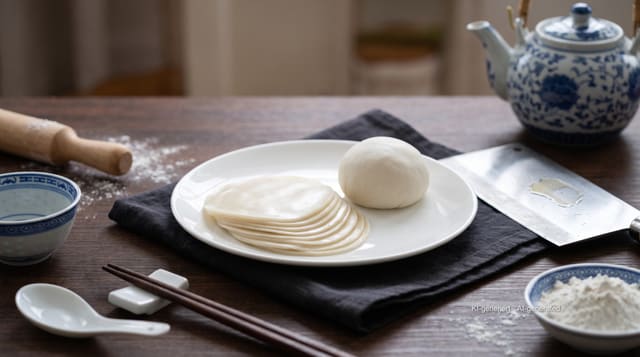
Dim Sum Dough from Wheat Starch — Translucent Wrapper for Har Gow
Culinse · 80 min
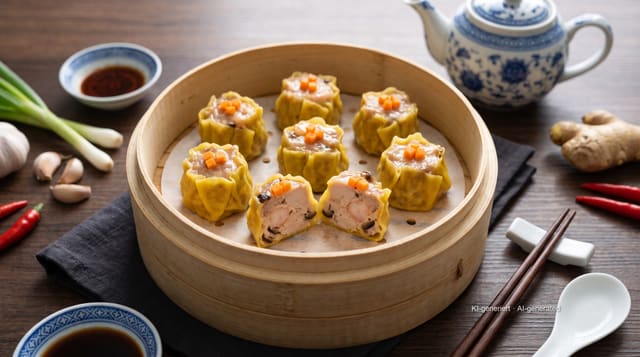
Cantonese Siu Mai — Open Dumplings with Pork and Prawns
Culinse · 80 min
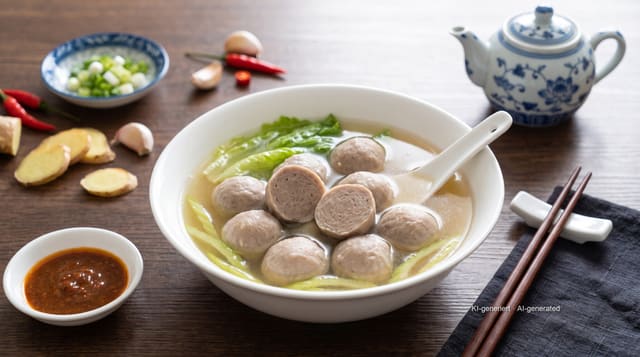
Chaozhou Niurou Wan — Beef Balls Chaozhou Style
Culinse · 135 min
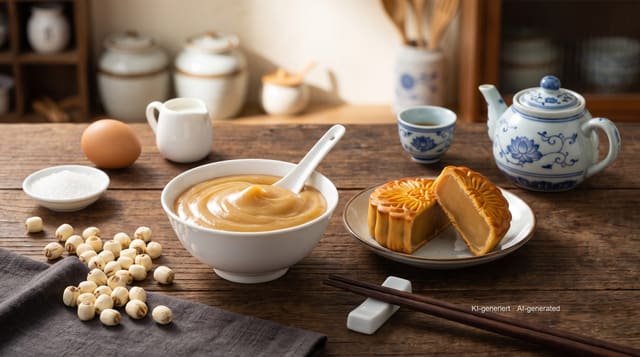
Lotus Seed Paste — Lianrong for Mooncakes and Yeast Buns

Culinse · 65 min
Cantonese Char Siu — Glazed Roast Pork from the Oven
Culinse · 55 min
Gulao Rou — Sweet and Sour Pork in the Cantonese Style

Culinse · 30 min