Pâte briséeShortcrust Pastry for Savoury Tarts
A basic French recipe used all over France: pâte brisée is the unsweetened shortcrust pastry made from flour, cold butter or margarine, salt, an egg yolk and a little ice-cold water, which is only pushed briefly across the work surface with the heel of the hand and not kneaded. It bakes golden yellow, crisp and delicately crumbly, and stays firm even under a moist filling. Quiche lorraine — Bacon and Cream Tart, Tarte Tatin — Upside-Down Apple Tart and Tarte à l'oignon — Onion Tart with Shortcrust Pastry, Cream and Bacon are built on it.
48
minutes
6
servings
5
Ingredients
Instructions
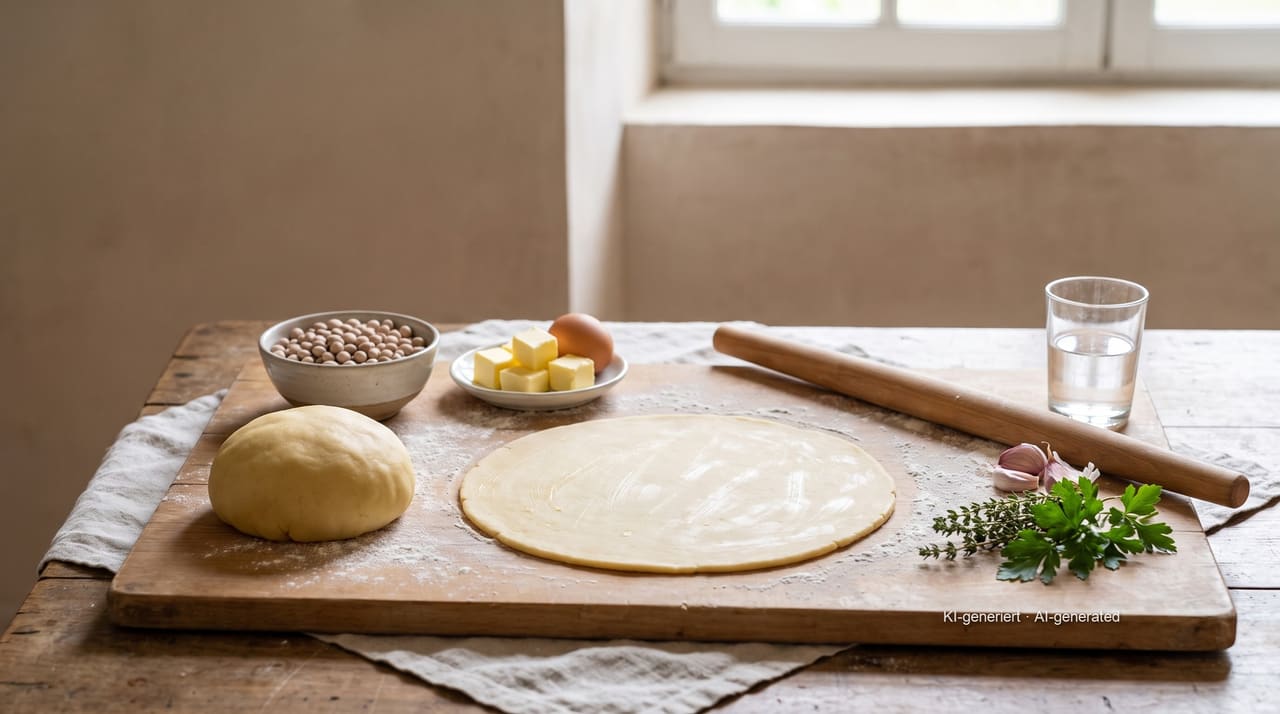
Put the flour and salt into a large bowl. Cut the cold butter or margarine into cubes of about 1 cm, add them and rub quickly into the flour with your fingertips until a sandy, crumbly mixture forms.
Press a well into the middle. Whisk the egg yolk with 3 tbsp ice-cold water, pour into the well and mix quickly into the crumbs with a fork or dough scraper; if the dough stays too dry, add the fourth tablespoon of water.
Tip the crumbs onto the work surface and, in portions, push them once firmly away from you across the surface with the heel of your hand, so that the fat is spread in thin layers (in France this move is called fraiser). Push everything together with the dough scraper and press briefly into a ball, without kneading, otherwise the dough becomes tough.
Press the ball into a flat disc, wrap in cling film and chill in the refrigerator until firm.
Preheat the oven to 200 °C conventional (top and bottom heat) and grease a tart tin of 26 to 28 cm diameter. Roll the dough out on a lightly floured work surface about 3 mm thick, lift it over the rolling pin into the tin, press it onto the base and sides and cut off the overhanging dough.
Prick the base several times with a fork and put the tin briefly in the refrigerator so that the edge does not slip during baking.
To bake blind, line the pastry with a sheet of baking paper that has been crumpled and smoothed out again, fill to the rim with dried pulses and bake on the middle shelf.
Carefully lift out the baking paper and pulses and keep baking the base without weights until it is dry and a light golden yellow.
Now fill the base according to the recipe and finish baking, or leave it to cool in the tin. Let the pulses cool and keep them in a jar for the next blind baking; they are no longer good for cooking.
Edited by Peter Hölzer, head chef and master butcher
Similar recipes

Culinse · 102 min
Tarte Bourdaloue — Pear and Almond Tart

Culinse · 85 min
Gâteau basque — Almond Cake with Cream Filling

Culinse · 85 min
Kougelhopf — Yeast Ring Cake with Raisins and Almonds from Alsace

Culinse · 75 min
Tarte aux myrtilles — Blueberry Tart

Culinse · 43 min
Sablés bretons — Butter Biscuits

Culinse · 40 min
Salade de pommes de terre tiède — Warm Potato Salad with Shallot Vinaigrette
Culinse · 27 min
Salade de chèvre chaud — Salad with Warm Goat's Cheese

Culinse · 215 min