GreekCakeBaked goodsVegetarian
TsourekiSweet Plaited Yeast Bread with Mahleb and Mastic
A Greek classic that is served all over Greece: tsoureki is the sweet plaited yeast bread that used to be baked only for feast days and today lies in the bakeries all year round, made from a rich dough with milk, eggs, butter or margarine and orange zest. Its unmistakable fragrance comes from mahleb, the ground kernels of the mahaleb cherry, and a hint of mastic. The crust gleams deep golden brown, and the crumb is so soft that it can be pulled apart in long, fine fibres.
90
minutes
24
servings
13
Ingredients

Instructions
Warm the milk and butter or margarine gently in a pot until the fat has melted, and leave to cool until hand-warm. Take 100 ml of the lukewarm mixture, dissolve 1 tsp of the sugar and the crumbled yeast in it, stir in 3 tbsp of the flour and leave the starter covered in a warm place until it bubbles.
Grind the mastic with a teaspoon of the sugar in a mortar to a fine powder; use only food-grade mastic and use it sparingly, otherwise the bread tastes bitter. In a large bowl, mix the remaining flour with the mastic, mahleb, salt, the remaining sugar and the orange zest.
Beat the 4 eggs. Add the starter, eggs and the rest of the milk and fat mixture to the flour and knead everything for about 15 minutes with a stand mixer or the dough hooks until the dough is soft, glossy and elastic and comes away from the side of the bowl; it may be slightly sticky.
Leave the dough covered in a warm place to rise until it has at least doubled.
Briefly press the dough together, shape it into a ball again and leave to rise covered a second time until it has risen clearly again; this makes the crumb especially fibrous.
Divide the dough into 6 equal pieces and roll each into a rope about 40 cm long. Press three ropes together at the top, plait them loosely, tuck the ends under and place both plaits well apart on a baking tray lined with baking paper.
Leave the plaits to rise once more, covered, until they have visibly risen and a dent made with a finger springs back slowly.
Preheat the oven to 170 °C (conventional). Beat the egg with the water, brush the plaits with it and sprinkle with flaked almonds if you like.
Bake the plaits on the lower shelf until they are deep golden brown and sound hollow when tapped on the underside; if they darken too early, cover them with baking paper after 20 minutes.
Leave the plaits to cool completely on a wire rack, and only then cut into slices.
Edited by Peter Hölzer, head chef and master butcher
Similar recipes

Culinse · 25 min
Staka me avga — Eggs in Hot Sheep's Cream with Tomato
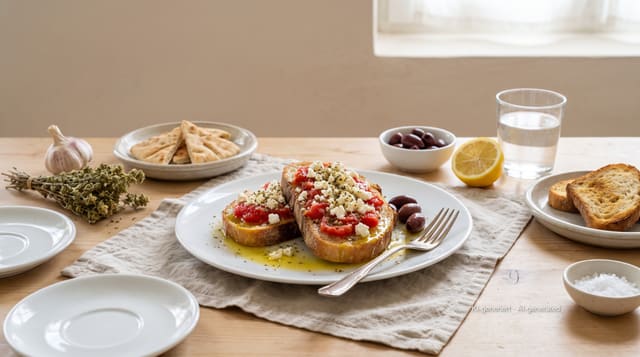
Culinse · 15 min
Riganada — Day-Old Country Bread with Tomato, Oregano and Feta

Culinse · 65 min
Kanelada — Cinnamon Syrup with Cold Water

Culinse · 60 min
Pastelaries — Dried Figs with Almonds and Sesame

Culinse · 50 min
Patatosalata Naxou — Potato Salad with Capers, Caper Leaves, Olives and Purslane

Culinse · 55 min
Elies tsakistes — Cracked Green Olives in Lemon Brine with Fennel

Culinse · 50 min
Ypovrychio — Mastic Fondant on a Spoon in a Glass of Water

Culinse · 200 min