Da LapiGlass Noodle Sheets with Cucumber and Sesame Sauce
A Chinese classic from Dongbei, the north-east of China: Da Lapi, literally big pulled skin, are wide, glass-clear strips of starch sheets, arranged colourfully on a platter with cucumber, carrot, strips of egg and fried pork and mixed with sesame sauce only at the table. The Lapi are cool, smooth and pleasantly elastic, and the sauce of sesame paste, vinegar, garlic and hot mustard tastes nutty and sour and tickles slightly in the nose. Unlike the Korean Japchae — stir-fried glass noodles with vegetables and beef, in which thin sweet potato noodles are fried warm in the pan, Da Lapi is dressed cold and lives on the sesame sauce.
40
minutes
4
servings
16
Ingredients

Instructions
Put the starch sheets into a large bowl, cover with warm water and soak until soft and pliable.
Bring plenty of water to the boil in a large pot, slide the sheets in one at a time and cook until completely translucent and showing no white spots; pull them apart with chopsticks from time to time, so that they do not stick together.
Put the sheets into a bowl of cold water until completely cooled and firm, drain them, lay them on top of each other and cut them into strips 2 cm wide. Toss the strips with 1 tsp sesame oil, so that they do not stick together, and keep them ready covered; do not put them in the refrigerator, because they go hard and cloudy there.
Cut the pork across the grain into strips 5 mm thin and mix with 1 tbsp soy sauce. Heat the oil in a frying pan until very hot and fry the strips, stirring, until browned all over and cooked through, with no pink spot, then leave to cool in a dish.
Wash the cucumber and carrot thoroughly, because they are eaten raw, peel the carrot and cut both into sticks 6 cm long and as fine as matchsticks. Roll up the Dan Pi and cut it crossways into strips 5 mm wide. Wash the coriander, shake it dry and chop it roughly.
Stir the sesame paste smooth with the water in a bowl, spoon by spoon: first it becomes firm and grainy, then little by little creamy, until it runs thickly from the spoon. Peel the garlic, chop it very finely and stir it in with the vinegar, the remaining 2 tbsp soy sauce, the sugar, salt, mustard and the remaining sesame oil.
Pile the Lapi strips in the middle of a large platter and lay the cucumber, carrot, strips of egg and meat in little heaps round about. Pour the sauce over, scatter with coriander and mix thoroughly with chopsticks at the table.
Edited by Peter Hölzer, head chef and master butcher
Similar recipes

Culinse · 105 min
Zhurou Dun Fentiao — Braised Pork with Glass Noodles
Culinse · 90 min
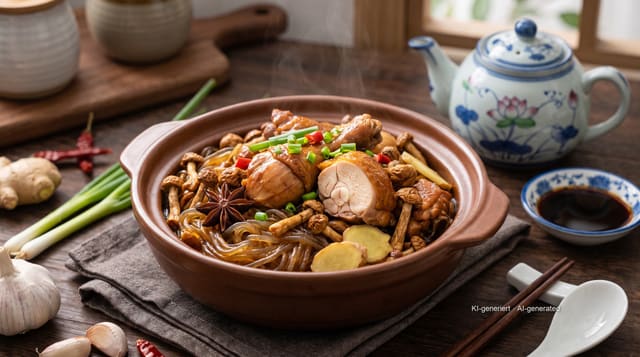
Xiaoji Dun Mogu — Chicken with Mushrooms and Glass Noodles, Dongbei Style
Culinse · 45 min
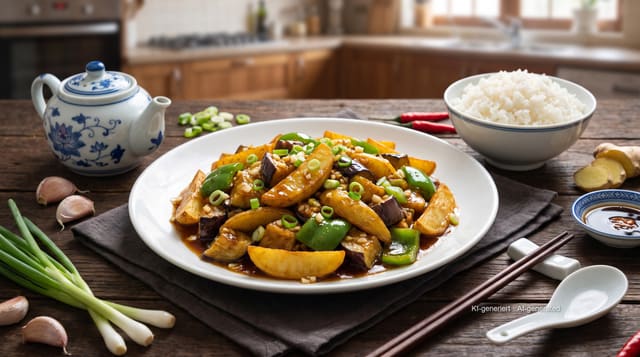
Di San Xian — Aubergine, Potato and Pepper Dongbei Style
Culinse · 55 min
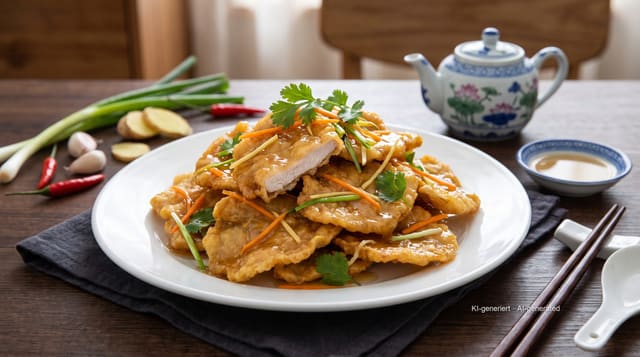
Harbin-Style Guobao Rou — Crispy Pork in Sweet and Sour Glaze
Culinse · 15 min
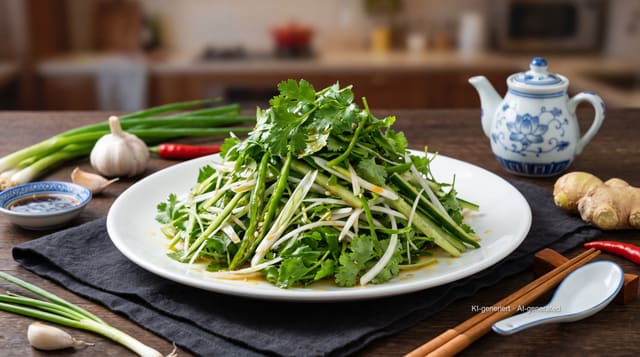
Laohu Cai — Tiger Salad with Coriander, Chilli and Spring Onions
Culinse · 110 min
Suan Cai Bai Rou Guo — Sauerkraut Hot Pot with Pork Belly

Culinse · 60 min
Nangua Xiaomi Zhou — Millet Porridge with Pumpkin

Culinse · 100 min