JapaneseMain courseLactose-free
Ura-MakiInside-out Rolls with Salmon, Cucumber and Sesame
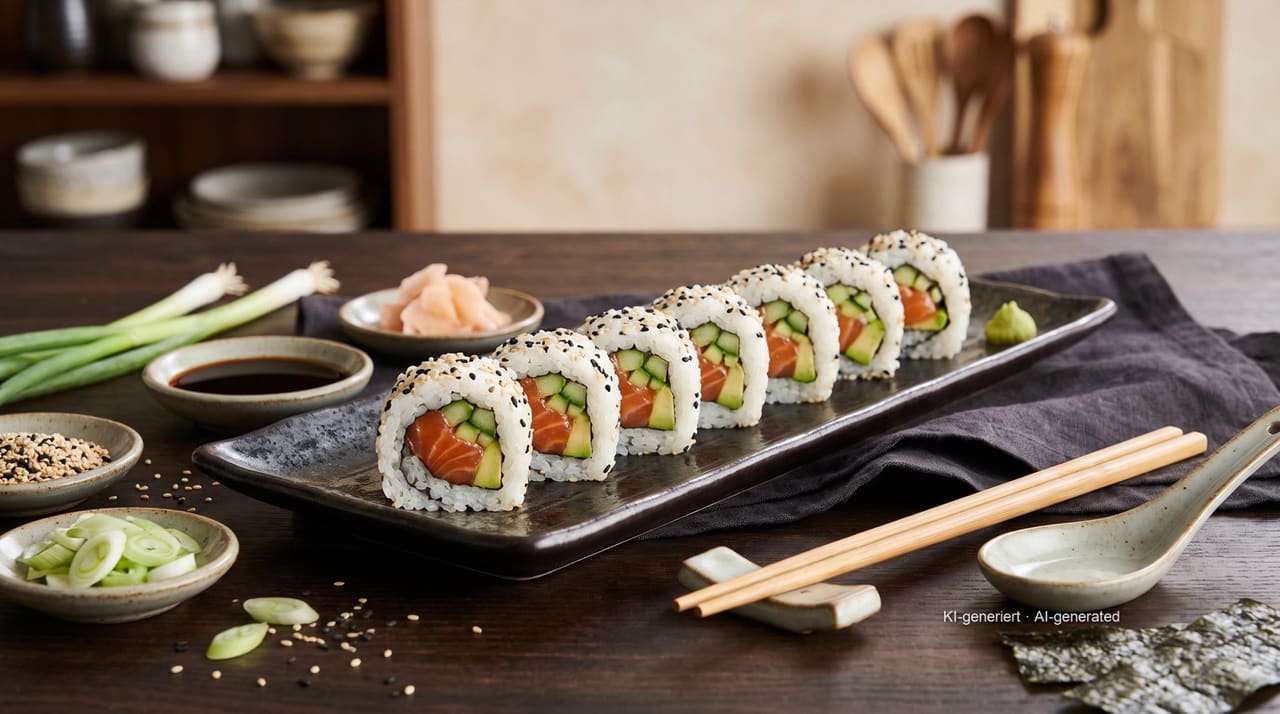
A sushi roll from Japanese cuisine that is found all over Japan today, although by tradition it is said to come from the USA: with ura-maki, the inside-out rolls, the rice is on the outside and the nori on the inside. A coat of white and black sesame seeds adds a nutty crunch around the loose, vinegared rice, and inside, tender, melting salmon, crisp cucumber and creamy avocado come together. The recipe makes 8 rolls, cut into 64 pieces.
45
minutes
4
servings
11
Ingredients
Instructions
Only buy fish for sushi that is sushi grade and explicitly sold for eating raw; it must have been frozen beforehand for at least 24 hours at -20 °C, which you should check with the fishmonger, or else it is frozen at home for 48 hours. Put frozen fish in its packaging on a plate in the fridge the day before and let it thaw slowly there. Good fish for sushi looks moist and glossy, is firm and smells only faintly of the sea, never fishy.
Prepare the sushi rice following the basic recipe and let it cool to body temperature under a damp cloth, not in the fridge, otherwise it becomes hard and crumbly. For the hand-dipping water (tezu), mix the water and rice vinegar in a small bowl: with moistened fingers, the sticky rice does not cling to your skin.
Briefly toast the sesame seeds again in a dry frying pan over a medium heat, stirring, until they smell fragrant and the first seeds pop softly. Tip them onto a plate immediately, as they keep darkening in the hot pan and turn bitter.
Wash the cucumber, quarter it lengthwise, cut out the watery seeds and cut the quarters into sticks about 1 cm thick and 20 cm long. The seeds would soften the nori from the inside, so pat the sticks dry as well.
Only now halve the avocado, remove the stone, peel it and cut it into 16 narrow wedges, as the flesh quickly turns brown when exposed to the air. The fruit should be ripe and yield to gentle pressure, but not yet be mushy.
Moisten the board, knife and your hands with cold water, as the fish does not stick to a wet blade and the cut surfaces stay smooth. Using long, drawing cuts, slice the salmon 1 cm thick and cut the slices into batons 1 cm wide. Cover the batons and keep them chilled until rolling, and rinse the board with hot water straight away.
Wrap the bamboo mat (makisu) completely in cling film, because with ura-maki the rice is on the outside and would otherwise stick between the slats. With dry hands, cut the nori sheets in half with scissors.
Lay one nori half shiny side down on a board. With moistened hands, spread about 120 g rice loosely over it, this time right to all the edges, and press it down only lightly enough for the grains to stick. Scatter an eighth of the sesame seeds evenly over the top and press them on gently.
Flip the sheet over in one quick movement and lay it rice side down on the wrapped mat, with the long side flush with the bottom edge of the mat. Draw a wafer-thin line of wasabi paste across the nori, and just below the centre lay the salmon, cucumber and two avocado wedges in a line, so that the filling reaches from edge to edge.
Lift the mat with both thumbs, hold the filling in place with your other fingers and roll the nori away from you over the filling in one go, until the bottom edge meets the top edge. Keep pulling back the edge of the mat as you go so that neither the mat nor the film gets rolled in. Press the roll firmly all round in the mat until it is round or slightly square, and shape the remaining rolls in the same way.
Moisten a long, sharp knife and cut each roll into eight pieces with drawing cuts: first halve it, then halve each half twice. Wipe the blade with a damp cloth after each cut, otherwise the rice sticks to it and tears the sesame coat.
Arrange the pieces cut side up, pour the soy sauce into small dishes and place the pickled ginger (gari) in a small heap alongside. Dip each piece only briefly by one edge into the soy sauce, so that the rice does not soak it up and fall apart.
Edited by Peter Hölzer, head chef and master butcher
Similar recipes

Culinse · 45 min
Buta Shabu — Pork in Kombu Broth with Ponzu

Culinse · 10 min
Hiyayakko — Cold Tofu with Ginger and Spring Onions

Culinse · 50 min
Kamo-Ramen — Ramen with Duck Breast and Grilled Leek
Culinse · 35 min
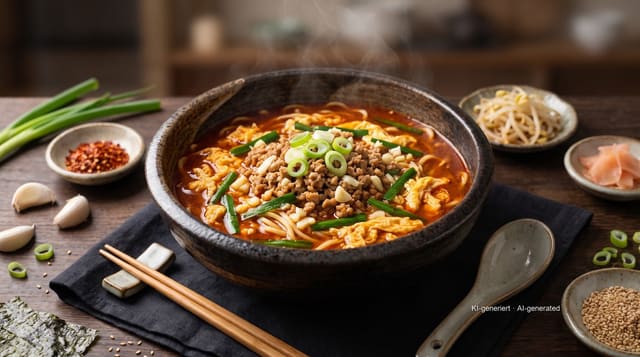
Miyazaki-style Karamen — Spicy Ramen with Garlic and Egg Flakes
Culinse · 35 min
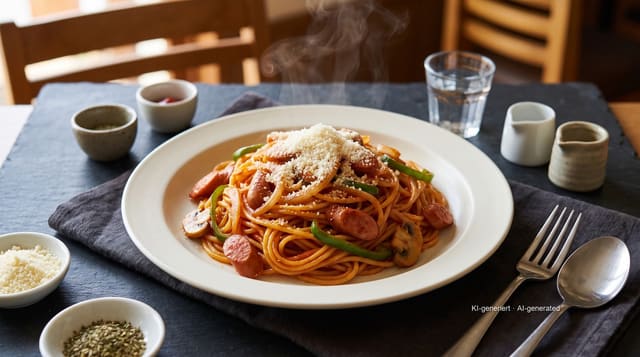
Napolitan — Yokohama-style Spaghetti with Ketchup

Culinse · 35 min
Anmitsu — Agar Cubes with Fruit, Bean Paste and Black Sugar Syrup

Culinse · 35 min
Hiroshima-Ramen with Shoyu-Tonkotsu Broth

Culinse · 35 min