🤖 Recipe and image AI-created, editorially reviewed · About our AI transparency
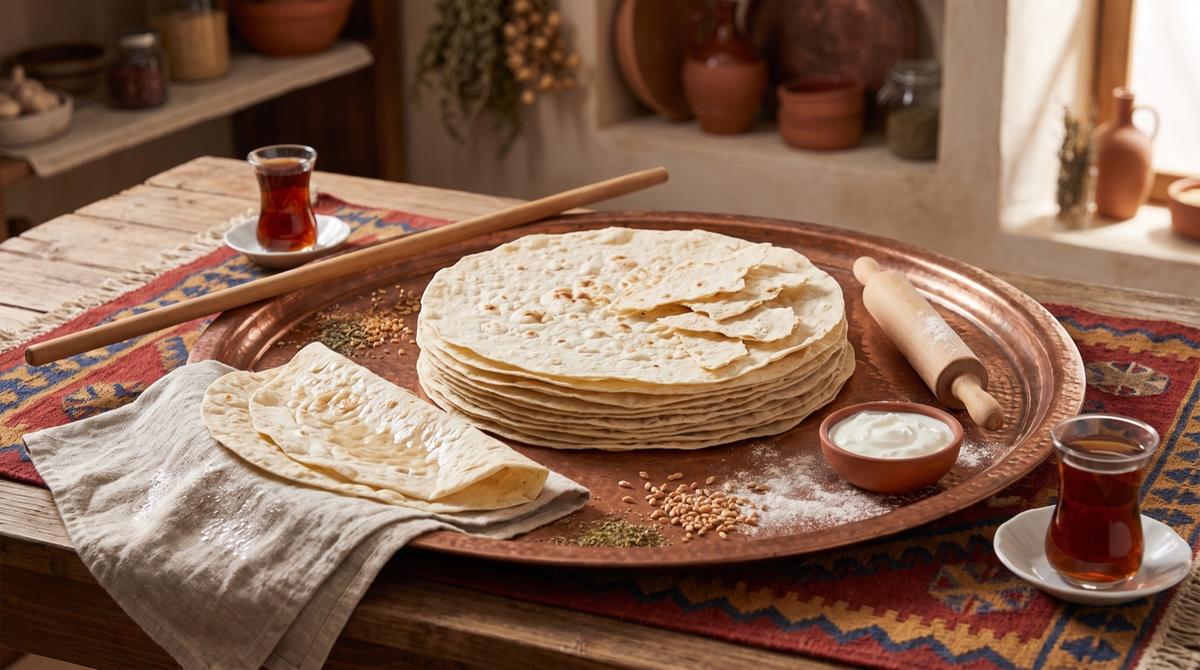
Nanê tîrî — Paper-thin Keeping Bread, Dried and Moistened Before Eating
A Kurdish classic from Erbil and Soran in northern Iraq: Nanê tîrî, nanî tîrî in Sorani, is the thinnest bread in Kurdish cuisine, and according to tradition it takes its name from the Tîr, the long, thin rolling pin the dough is wrapped around. In Persian it is called nan-e tiri, in Turkey kuru yufka. Unlike Nanê sêlê — paper-thin flatbread from the domed griddle, which is eaten fresh and soft, Nanê tîrî bakes for just a few seconds, then dries out completely and keeps for weeks, until a few splashes of water in a cloth make it soft and pliable again.
Cook time
70 min
Servings
12
Ingredients
4
Nutrition
per serving142 kcal
Calories
4 g
Protein
0 g
Fat
30 g
Carbs
Ingredients
For 12 servings
Instructions
- 1
Mix the flour and salt in a large bowl, gradually pour in the water and bring everything together by hand into a firm but supple dough. Knead the dough on the work surface for about 10 minutes until it is smooth and as soft as an earlobe.
- 2
Cover the dough with a damp cloth and leave it to rest so that it relaxes and can later be rolled out wafer-thin.
- 3
Divide the dough into 12 pieces of about 65 g each, roll them into smooth balls and leave them, dusted with flour, under the cloth. Preheat the baking surface over a high heat: a Sêl (a domed iron griddle from a Turkish or Arab shop), or alternatively a large upturned cast-iron frying pan or a heavy dry frying pan.
- 4
Press a ball flat and roll it out with an ordinary rolling pin into a circle of about 15 cm. Place the Tîr, a long, thin rolling pin (sold as “oklava” in Turkish shops), at the front edge and wrap the flatbread tightly around it.
- 5
Roll the wrapped pin back and forth on the work surface with both hands held flat, sliding your hands from the centre outwards so that the dough is stretched wider on the pin. Unroll the flatbread, give it a quarter turn, dust it lightly with flour, wrap it up again and repeat until it measures about 30 cm and is so thin that the work surface shows through.
- 6
Wrap the flatbread onto the pin and unroll it onto the hot Sêl or pan. Bake only until it firms up and shows pale bubbles, about 15 to 20 seconds, then turn it over and bake the second side just as briefly; brown patches make it brittle later on.
- 7
Lay the flatbreads side by side on clean tea towels and leave them to air-dry in the kitchen, not in the sun, until they have become completely stiff and dry overnight; turn them once along the way. While one flatbread is baking, roll out the next, and only touch the hot surface with oven gloves.
- 8
Stack the dry flatbreads on top of each other and store them somewhere dry and airy. Before eating, sprinkle a flatbread evenly with water on both sides using wet fingers or a spray bottle, wrap it in a tea towel and leave it until it is soft and pliable.
- 9
Tip: Stored dry in a tin or a cloth bag, the bread keeps for several weeks; flatbreads with dark or furry spots have gone mouldy and should be thrown away. Freezing is not necessary, but it works with freshly baked flatbreads that are still soft, which keep for three months with baking paper between them. Moistened, the bread goes well with cheese, fresh herbs and Dew — yoghurt drink with mint, and dry, it can be broken into pieces and crumbled into soups and stews.
Similar recipes
 ⏱ 10 min
Çaya kakutî — Mountain Mint Tea
 ⏱ 60 min
Tirşka patate — Potato and Tomato Stew with Turmeric
 ⏱ 40 min
Tirşî — Mixed Pickles with Cauliflower, Carrot, Cucumber and Pepper
 ⏱ 33 min
Tolik bi hêk — Mallow or Spinach with Egg
 ⏱ 25 min
Xoşav — Compote of Dried Apricots, Prunes and Raisins
 ⏱ 20 min
Zelateya kurdî — Tomato, Cucumber and Onion Salad with Sumac
 ⏱ 20 min
Zelateya kuzele — Watercress Salad with Radishes and Pomegranate
 ⏱ 80 min
Zerde — Saffron Rice Pudding with Raisins and Almonds